
Nick Garbutt Wildlife Worldwide Photography Tours
 I offer an exclusive programme of wildlife photography tours and workshops in partnership with top UK operator Wildlife Worldwide.
Our aim is to offer unmatched experiences that maximize opportunities to photograph and watch wildlife in the finest locations, while helping participants improve their photographic techniques and achieve the best results, irrespective of their level of experience.
Locations are carefully chosen to offer the best photographic opportunities, with enough time spent to get the most from each location.
 The binocular icon denotes a tour that is also suitable for those more interested in watching and enjoying wildlife, rather than solely concentrating on photography.
Current Tour Availability
- ECUADOR: Andes to Amazon Photography Workshop, Jan 2027, places remain: please enquire
- TANZANIA: Southern Serengeti: Great Migration, March 2027, places remain: please enquire
- PATAGONIA: Pumas, Condors & Landscapes, July 2027, two places remain: please enquire
- BORNEO: Macro Buganza, Sept 2027, places remain: please enquire
Photography Tours Schedule
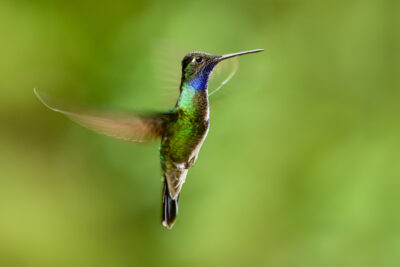
Male magnificent hummingbird in high montane forest © Nick Garbutt
Dates: 9th - 23rd May 2026
Price: £9,895 (Twin-share: Flights inclusive)
Price: £9,195 (Twin-share: Land Only)
Single Supplement: £1,695
Maximum Group 12
Current Availability: FULL
LEADERS: Nick Garbutt & Alex Hyde
Click for further details
 GRADING: Moderate. A variety of conditions from humid lowland rainforest, to higher elevation cooler cloud forests. Walks generally short, but sometimes medium length (1-2km). Mostly flat, but some hills can be moderate to steep with uneven under foot conditions (cloud forest areas). Early morning and late evenings as there are night walk options.
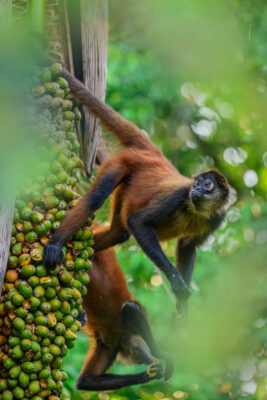
Adult Central American spider monkey feeding on palm fruits © Nick Garbutt

The Caribbean race of the iconic red-eyed tree frog has distinctive blue flanks © Nick Garbutt
Costa Rica has long been regarded as a Central American jewel, renowned for its remarkable biodiversity and extensive protected forest areas. The incredible array of wildlife results from its position connecting North and South America and its topography, as a central spine of mountains creates different habitats and forest types on the Pacific and Caribbean slopes.
On previous workshops we have included locations on both slopes, attempting to gain a full appreciation of the country’s incredible biodiversity. Whilst these have been successful, it’s meant a certain degree of compromise, as climatic variations dictate there is no time of the year when conditions are simultaneously ideal on both slopes.
Hence, we are now offering separate workshops, targeting prime locations on each slope at ideal times (the Pacific slope workshop is scheduled for September 2027).
On this workshop we visit locations on the Caribbean slope, beginning with Tortuguero on the coast, one of Costa Rica’s most famous national parks. It is renowned for turtle nesting, with four species using the park’s beaches to lay their eggs. Inland are forests and a labyrinth of waterways, where birds, primates (mantled howler monkey, Central American spider monkey) and reptiles like green basilisks are easily seen (jaguars and ocelots are very occasionally seen too!). This area is mainly explored by boat, but around our lodge and in other areas there will also be walks, including night walks, where spectacular frogs and a myriad of insects and other invertebrates will be our primary targets.

The yellow morph of the eyelash pit viper is sometimes called ‘oropel' © Nick Garbutt

The strawberry or blue jeans poison dart frog is active during the day and can often be seen of walks © Nick Garbutt
We then move onto the Sarapiqui region, one of the most biologically rich areas in Costa Rica. Situated at the base of the highland areas of Braulio Carrillo National Park, where the Sarapiqui River emerges into the lowlands, the region hosts a variety of accessible reserves and wildlife locations that we can explore. There will hopefully be opportunities to photograph iconic red-eyed tree frogs, strawberry and green-and-black poison dart frogs, glass frogs and various lizards and snakes, together with scarlet and great green macaws, and a wealth of insects including leaf-cutter ants.

Female Costa Rican orange-kneed tarantula in montane forest © Nick Garbutt
Our final locations is a private montane forest reserve high on the on the Caribbean slope. Here a variety of hummingbirds like violet sabrewing and magnificent hummingbird provide constant activity around the lodge and we will spend time working on various techniques to photograph them. The lodge grounds attract many other birds and mammals like agoutis, coatis and pacas (after dark). Trails through the forest and along the streams offer the chance of good photography opportunities especially for frogs after rain. The lodge has a moth trap which can attract a wondrous array of species at night and provide extensive macro photography options.

Colonies of leaf-cutter ants are a feature in most lowland areas © Nick Garbutt
Costa Rica is without question a fabulous wildlife destination. The combination of wonderful biodiversity, accessibility and good quality accommodation means it warrants a tour that offers both a breadth of experiences and extensive lengths of stay in each location to make the most of the excellent photographic possibilities.

The spectacular owl-eye butterfly, seen here shortly after emerging from its cocoon © Nick Garbutt
Why a Workshop?
Tropical rain forests are the greatest expressions of life on the planet and serve up a wonderful array of species, but they are also amongst the most challenging places to take photos successfully. As such rain forest locations lend themselves ideally to workshop format tours, where fewer places are visited but more time is spent in the chosen locations than would otherwise be the case on a 'regular' tour.
For this workshop, hosted by two leaders with a wealth of rain forest and macro photography experience, extended stays in several of Costa Rica's prime locations have been chosen to maximise the photographic potential. In addition, the diversity of these sites offers the opportunity to introduce and teach numerous general photography and specialist macro and lighting techniques, such that participants gain as much insight as possible which hopefully helps move their photography onto the ‘next level’.
 Photography Equipment
As with most rainforest trips, a variety of focal length lenses are useful, from close focusing wide angle e.g. 14-24mm or 16-35mm, to short-tele macro e.g. 105mm, to longer telephotos, e.g. telephoto zoom 100-400mm. These will cover most situations with invertebrates, frogs, reptiles and some mammals and birds. Flash equipment very useful, especially with off-camera capability and in conjunction with a diffuser or ‘soft box’. A longer telephoto e.g. 500mm or 600mm is better for birds and mammals. Waterproof protection for camera gear is highly recommended. And a tripod is advisable.
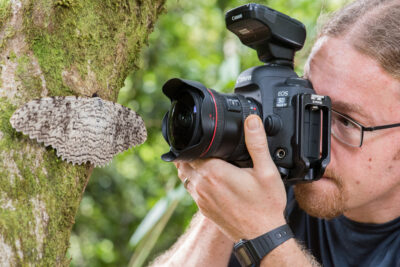
Alex Hyde is undoubtedly one of the UK's leading macro photographers © Nick Garbutt
Alex Hyde
I am delighted to be joined by good friend Alex Hyde on this trip. Alex is one of the UK's finest exponents of macro photography, combining the best of art and science into his exquisite images. He is a master of the technical aspects of digital photography and in the field or indoor workshop environment has the enviable skill of being able to convey challenging topics and ideas, concisely, simply and in a way that makes them understandable. To see more of Alex's stunning work click here
Click: contact Wildlife Worldwide to book this tour
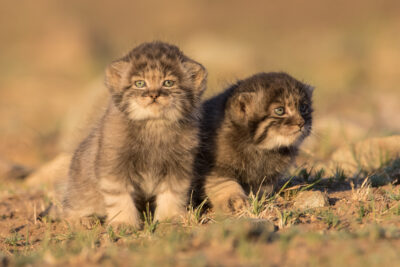
Pallas' cat kittens outside their den © Otgonbayar Baatargal
Dates: 18th - 31st July 2026
Price: £7995 (Twin-share: Flights inclusive)
Price: £7395 (Twin-share: Land Only)
Single Supplement: £750
Maximum Group 8
Current Availability: FULL
GRADING: Moderate to Challenging. A reasonably good level of fitness is required to get the most out of this trip. Locations remote, and travel tiring. Accommodation in the field simple but comfortable. Days in the field will may be long and walks of 1-2km over uneven terrain may be necessary (carrying your camera gear).
Perhaps, more than any other country Mongolia epitomises the notion of wilderness: this region of Central Asia has captivated the psyche of explorers for centuries. Even today, when Western culture and lifestyle has infiltrated most corners of the globe, much of Mongolia remains steadfastly untouched, with a traditional nomadic and pastoral ways of life the norm outside the capital city Ulaanbataar. More specifically, these vast, virtually uninhabited lands, with seemingly endless landscapes, have captivated biologists and naturalists looking for something different.
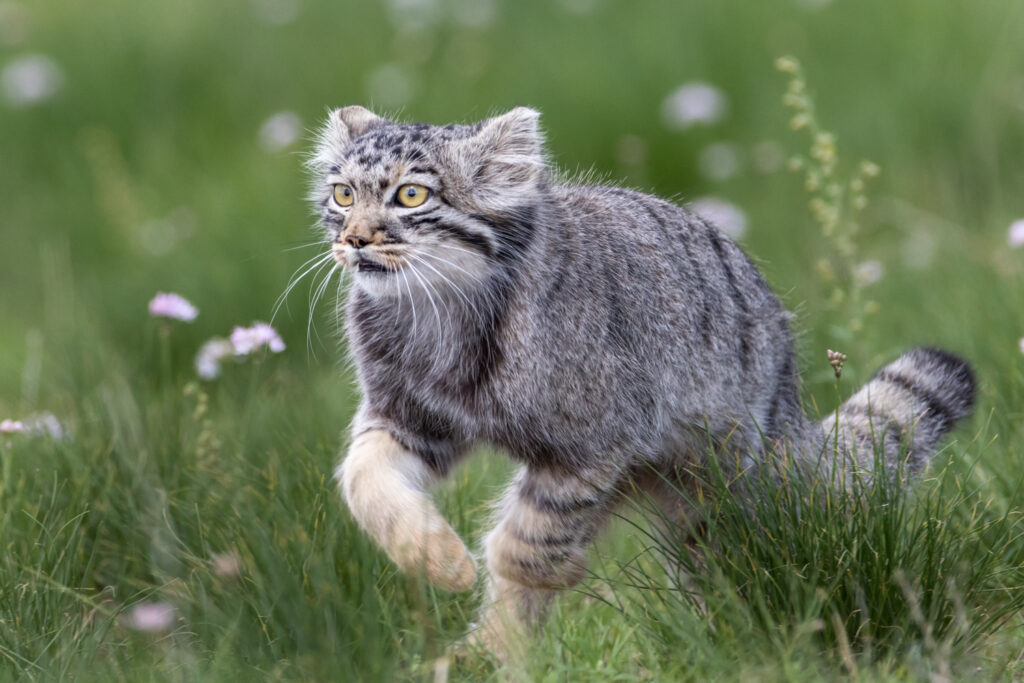
An adult Pallas's cat in summer grasslands © Otgonbayar Baatargal
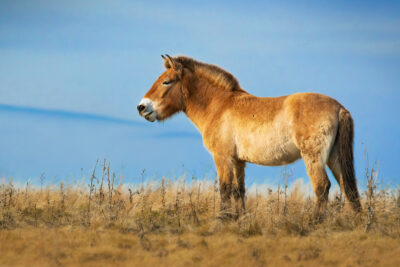
Przewalski's horse in Hustai National Park © Shutterstock
Mongolia encompasses a variety of contrasting biomes - along its southern border, the arid landscapes of the Gobi Desert, home to the last wild Bactrian camels; in the far west a stony semi-desert, stretching up into the imposing Altai Mountains, where snow leopards roam; in the north, straddling the border with Russia, there is the vast boreal forest or taiga (part of the largest forest on earth); and in the east, great rolling grasslands or steppes that are the focus of this tour and are home to many herds of ungulates, including Mongolian gazelle, as well being one of the strongholds of Pallas’s cat.
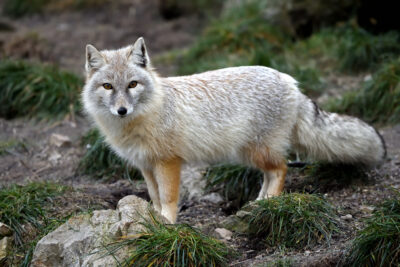
A corsac fox, another hardy inhabitant of the Mongolian steppe © Shutterstock
Although the range of Pallas’s cat covers a vast portion of Central Asia, from near the Caspian Sea in the west, to the Tibetan Plateau in the south, through China and into Mongolia and Russia, it is highly fragmented and they are nowhere common. Their populations primarily being limited by the distribution of their main prey species, pikas, voles and other rodents. Mongolia is home to the largest populations, with the Eastern Steppes a renowned stronghold, as they comprise grasslands with huge rodent numbers, interspersed with rocky outcrops that provide cover for the cats and ideal denning sites for rearing their young.
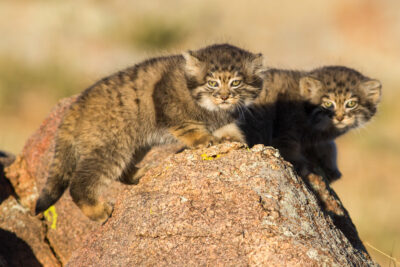
Pallas' cat kittens basking in evening sun © Otgonbayar Baatargal
Pallas’s cat have incredibly dense fur and are superbly camouflaged, so can be elusive. However, we will be working with local scientists and field guides (who also helped with filming the sequences for Planet Earth 3), at sites and locations where cat densities are relatively high, so we should hopefully have repeated rewarding encounters and sightings with this intriguing feline - because of its scowling expression, sometimes called the world's ‘grumpiest’ cat.
Mongolian summer days are long, with sunrise around 5.30am and sunset after 20.30pm. Given the hours around dawn and dusk are the times the cats are most active -especially when they are hunting - and we will be targeting these times to maximise our chances. However, when kittens require feeding, there can be hunting activity at any time their rodent prey is active, so consequently, some days in the field are likely to be long, but of course the potential rewards are high.
Photography Equipment
Mainly telephoto: a lens of 500mm plus is recommended for Pallas’s cats and most other wildlife. Shorter lenses e.g. 70-200mm or 24-120mm for context, scenes and landscapes.
Click: contact Wildlife Worldwide to book this tour
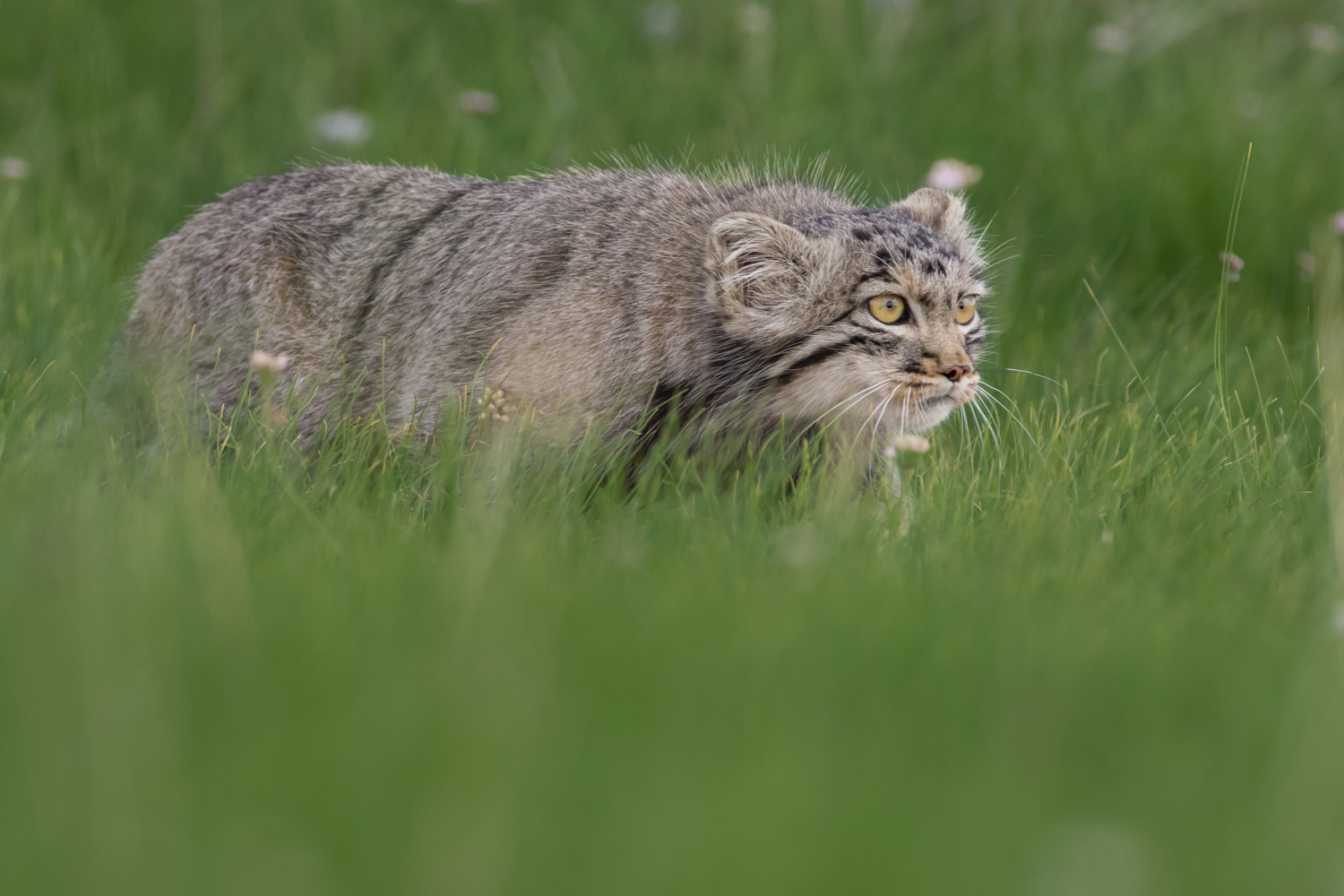
A Pallas' cat prowls through long grass looking for rodents © Otgonbayar Baatargal
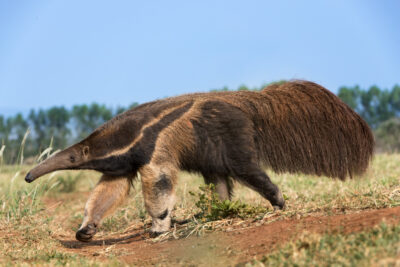
Southern areas of the Pantanal are excellent for seeing giant anteaters © Nick Garbutt
Dates: 8th - 25th August 2026
Price: £14,995 (Twin-share: Flights inclusive)
Price: £13,995 (Twin-share: Land Only)
Single Supplement: please enquire
Maximum Group Size: 10
Current Availability: FULL
Click for further details

Often shy, the toco toucan can readily be seen many locations in the Pantanal © Nick Garbutt
GRADING: Easy to Moderate. Hot, sometimes very hot, over 35˚C, but dry. Mainly vehicle-based, either open boats or open trucks. Short walk options over flat terrain at some lodges. Early mornings. Biting insects can be a nuisance around rivers.

A female southern tamandua carrying her offspring, northern Pantanal © Nick Garbutt
In the heart of South America, south of Amazonia and east of the Andes, lies an immense landlocked delta where seasonal floodwaters rise then recede providing an annual pulse of nutrients that results in one of the richest wildlife areas on earth - the Pantanal.
After rains in the surrounding uplands, more than 80% of the Pantanal becomes submerged (December-March) and wildlife is dispersed around the limited areas of dry land, but as these waters drain away and the land dries out, migratory birds return and other wildlife becomes more concentrated. These concentrations reach their peak in the dry season (July-October) when the remaining pools and flowing watercourses act like wildlife magnets.
The quantity of wildlife the area supports is breath taking, but it is more its accessibility that makes a trip to the Pantanal so memorable and rewarding photographically. Seeing iconic and rare animals frequently and at close quarters is a very real possibility.

A huge male jaguar emerges from cover on the river bank, Cuiaba River © Nick Garbutt

A female jaguar swimming across the Cuiaba River © Nick Garbutt
Of course, for most, jaguars top the wish list: there is no finer place in the world to see South America’s apex predator, and the chances of success are very realistic, especially along renowned rivers. Add to this, the likelihood of encounters with giant otter, Brazilian tapir, giant anteater, southern tamandua, hyacinth macaw, both howler and capuchin monkeys, jabirú storks, toco toucans, yellow anaconda and countless capybara and yacaré caiman, and it is easy to appreciate why the Pantanal is regarded as such a special place.
This huge area can conveniently be divided into North and South: each is different in character, with complimentary strengths and highlights. Hence, this trip has been designed to combine the best elements of both these regions and take in locations that offer a diversity of habitats, fauna and flora and of course photographic experiences.

The world’s largest rodent, a capybara hosting a pair of cattle tyrants © Nick Garbutt
In the northern Pantanal we begin the tour at a location along the famed Transpantaneira highway, where drying pools meld with open savanna areas and patches of woodland. There is a huge amount to see and photograph in and around the immediate vicinity of the lodge and we will explore the area on foot and more broadly by vehicle. There are also canopy towers, where birds and primate can be viewed.

A yellow anaconda catching fish at river edge © Nick Garbutt
Along the Cuiaba River, we will be based in a prime jaguar viewing location and will explore the main river and its tributaries by boat looking for the cats and other wildlife. The density of jaguars in this area is particularly high, and consequently, the frequency of sightings is normally very good.
Our final location is a remote private ranch in the southern Pantanal far away from other tourist facilities. Here we will concentrate on looking for iconic species like giant anteater and tapir, as well as a vast wealth of birds. The property also hosts conservation and research projects focusing on tapirs and the elusive giant armadillo.
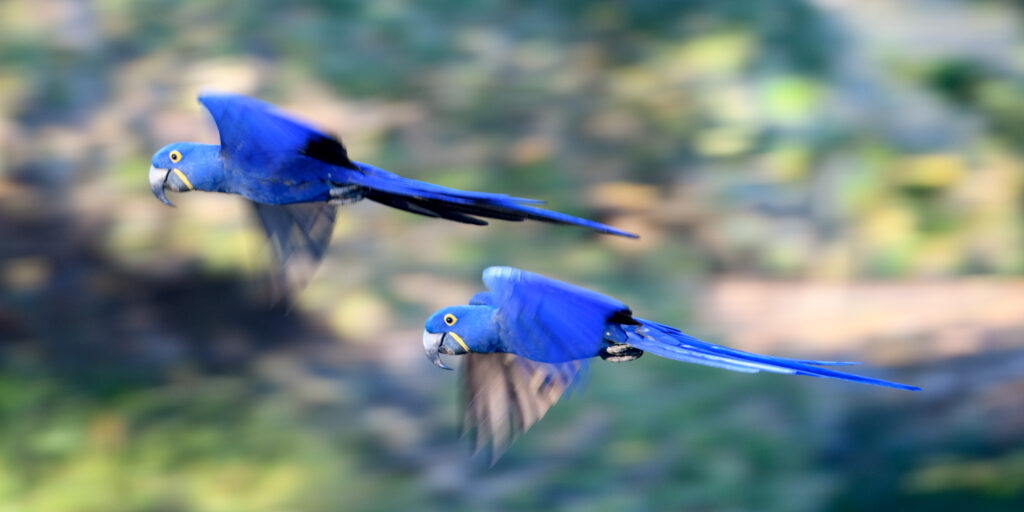
A pair of hyacinth macaws fly close to a lodge in the northern Pantanal © Nick Garbutt

A pair of red-and-green macaws at Buraco das Araras © Nick Garbutt
Extension: Buraco das Araras
In addition to the main tour, we are offering a two-night extension to the Jardim area, to visit Buraco das Araras, the incredible 'Sinkhole of the Macaws', where groups of spectacular red-and-green macaws can be photographed in flight and at close quarters against a stunning backdrop. There will also be opportunities to photograph many other birds and visit Rio do Prata to snorkel in its crystal-clear waters, where a wonderful array of fish can be seen. Further details are available on request.
Photography Equipment
Mainly telephoto, e.g. 100-400mm or 100-500mm for jaguars, other mammals and birds. A longer telephoto e.g. 500mm or 600mm can be useful. Shorter lenses e.g. 70-200mm and 24-120mm good for habitats and landscapes. A tripod or monopod is useful from a boat.
Click: contact Wildlife Worldwide to book this tour

The deep shadow background of the cliff walls at Buraco das Araras perfectly offset the spectacular colours of a pair of red-and-green macaws © Nick Garbutt

Buraco das Araras, the spectacular 'Sinkhole of the Macaws’ © Nick Garbutt

The spectacular oscillated turkey in Belize © Lucas Bustamente
Dates: 6th - 23rd September 2026
Price: £11,995 (Twin-share: Flights inclusive)
Price: £11,195 (Twin-share: Land Only)
Single Supplement: £1,295
Maximum Group 12
Current Availability: FULL
LEADERS: Nick Garbutt & Alex Hyde
Click for further details
GRADING: Moderate. A variety of conditions from humid lowland rainforest, to higher elevation cooler cloud forests. Walks generally short, but sometimes medium length (1-2km). Mostly flat, but some hills can be moderate to steep with uneven under foot conditions (cloud forest areas). Early morning and late evenings as there are night walk options.

A white-nosed coati climbing in forest understory © Nick Garbutt

The red-eyed tree frog is common in both Belize and Panama © Nick Garbutt
While Costa Rica attracts the plaudits, there are other countries in Central America that offer wonderful wildlife and photographic experiences, off the beaten track and away from the crowds. Two of these are Belize and Panama, that each still support vast tracts of tropical forest wilderness with corresponding impressive and accessible biodiversity.
We begin in Belize, a country with a relatively low human population and huge remaining areas of tropical forests. Both mammal and bird diversity is impressively high and around our established wilderness lodge, where species have become more tolerant, there is an excellent chance to encounter numerous species. Tapirs, jaguars and ocelots are often recorded on camera traps and are seen during daylight from time-to-time. More often seen are Central American spider monkeys and Yucatán black howler, while regularly seen birds include golden-hooded tanager, keel-billed toucan, oscillated turkey and perhaps even the elusive agami heron and ornate hawk-eagle.
While these species may be photographed opportunistically, we will also devote time and effort to finding and photographing a wealth of smaller creatures, notably various frogs including the iconic red-eyed tree frog, reptiles, including snakes and a myriad of insects and other invertebrates.

The islands of the Boca de Toro archipelago each support their own colour variant of the strawberry poison-dart frog. Perhaps this one should be renamed the ‘blueberry’ poison-dart frog? © Lucas Bustamente

Another colour variant of the strawberry poison dart frog © Lucas Bustamente
Lying at the narrowest part of the Central American isthmus, Panama occupies a globally important position, as constitutes a vital part of a biological corridor, connecting North and South America (Mesoamerican Biological Corridor), which facilitates a rich exchange of animal and plant species.

El Valle is a good place to look for glass frogs © Nick Garbutt
Our two primary locations provide great contrast. In the higher-elevation cloud forests of El Valle, we will explore a variety of trails and habitats and hope to encounter mammals like Geoffroy’s tamarin and Hoffmann’s two-toed sloth, as well as various tanagers, hummingbirds and toucans. Around the lodge and along the many trails, we also have a good chance to see a considerable diversity of frogs and reptiles that are sure to provide excellent photographic opportunities. These may include common basilisk, boquete rocket frog, brilliant forest frog, hourglass frogs and glass frogs.

A colony of common tent-making bats © Nick Garbutt
In contrast, Isla Bastimentos on the Caribbean coast offers fabulous opportunities for close encounters with capuchin monkeys, three-toed sloths and a variety of birds, reptiles and amphibians. There are several islands within the Boca de Toro archipelago, each of which support their own colour-variant of the strawberry poison-dart frog, some of which are not red and do not resemble strawberries! We hope to photograph a variety of these.
In combination, the varied locations we have chosen in Belize and Panama offer a wealth of wildlife and considerable photographic potential, making this tour an exciting addition to our established programme of rainforest workshop destinations.
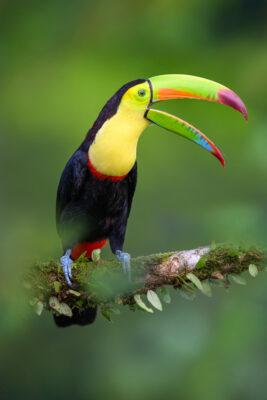
Adult keeled-billed toucan © Nick Garbutt
Why a Workshop?
Tropical rain forests are the greatest expressions of life on the planet and serve up a wonderful array of species, but they are also amongst the most challenging places to take photos successfully. As such rain forest locations lend themselves ideally to workshop format tours, where fewer places are visited but more time is spent in the chosen locations than would otherwise be the case on a 'regular' tour.
Showing subjects, large and small, in the context of their environment, is a key technique, especially in habitats like tropical rainforests. Here a female orange-kneed tarantula walks across the forest floor in Costa Rica © Nick Garbutt
For this workshop, hosted by two leaders with a wealth of rain forest and macro photography experience, extended stays in several of Belize and Panama's prime locations have been chosen to maximise the photographic potential. In addition, the diversity of these sites offers the opportunity to introduce and teach numerous general photography and specialist macro and lighting techniques, such that participants gain as much insight as possible which hopefully helps move their photography onto the ‘next level’.
Photography Equipment
As with most rainforest trips, a variety of focal length lenses are useful, from close focusing wide angle e.g. 14-24mm or 16-35mm, to short-tele macro e.g. 105mm, to longer telephotos, e.g. telephoto zoom 100-400mm. These will cover most situations with invertebrates, frogs, reptiles and some mammals and birds. Flash equipment very useful, especially with off-camera capability and in conjunction with a diffuser or ‘soft box’. A longer telephoto e.g. 500mm or 600mm is better for birds and mammals. Waterproof protection for camera gear is highly recommended. And a tripod is advisable.
Alex Hyde is undoubtedly one of the UK's leading macro photographers © Nick Garbutt
Alex Hyde
I am delighted to be joined by good friend Alex Hyde on this trip. Alex is one of the UK's finest exponents of macro photography, combining the best of art and science into his exquisite images. He is a master of the technical aspects of digital photography and in the field or indoor workshop environment has the enviable skill of being able to convey challenging topics and ideas, concisely, simply and in a way that makes them understandable. To see more of Alex's stunning work click here
Click: contact Wildlife Worldwide to book this tour
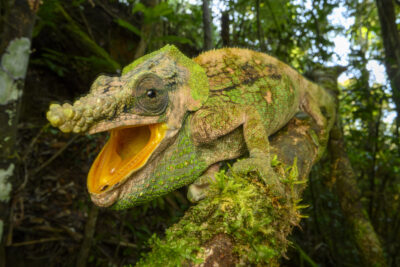
A malthe or 'green-eared' chameleon in Maromizaha Forest © Nick Garbutt
Dates: 31st October - 11th November 2026
Price: £9,995 (Twin-share: Flights inclusive)
Price: £8,995 (Twin-share: Land Only)
Single Supplement: please enquire
Maximum Group 38
Current Availability: FULL
Extension Option: The Far North
Dates: 10th - 19th November
Price: £TBC (Twin-share)
Maximum Group 6
Current Availability: FULL
Click for further details
GRADING: Moderate. A variety of conditions from hot (over 35˚C), dry forest (north west, Anjajavy), to cooler mid-elevation rainforests (central east, Andasibe). All wildlife watching is on foot. Walks are generally short to medium length (1-3km), but occasionally may be longer and inclines can be steep with uneven footing, especially in rainforest locations. Both early morning and late evenings as there are night walk options in both locations.
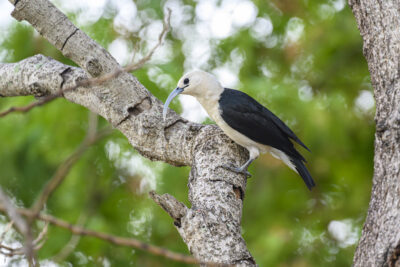
The striking sickle-billed vanga is readily seen at Anjajavy © Nick Garbutt
Madagascar is an island full of intrigue that is without equal and the destination for the 2026 Festival of Wildlife. We will visit two major wildlife-rich locations, the rainforests of Andasibe and the dry deciduous forests of Anjajavy, that in combination offer very different and complimentary highlights sure to generate an unforgetable wildlife experience.
The first location is Andasibe-Mantadia National Park, arguably Madagascar’s premier eastern rainforest reserve. Our exclusive base is Mantadia Lodge, which offers easy access to several different forest sites, where we should encounter indris, diademed sifakas, several other varieties of lemur, numerous chameleons, and a bewildering array of other endemic species, all at close quarters. Those with an interest in smaller creatures will be in their element with enigmatic creatures like giraffe-necked weevils, giant stick insects, colourful frogs and cryptically camouflaged leaf-tailed geckos to discover.
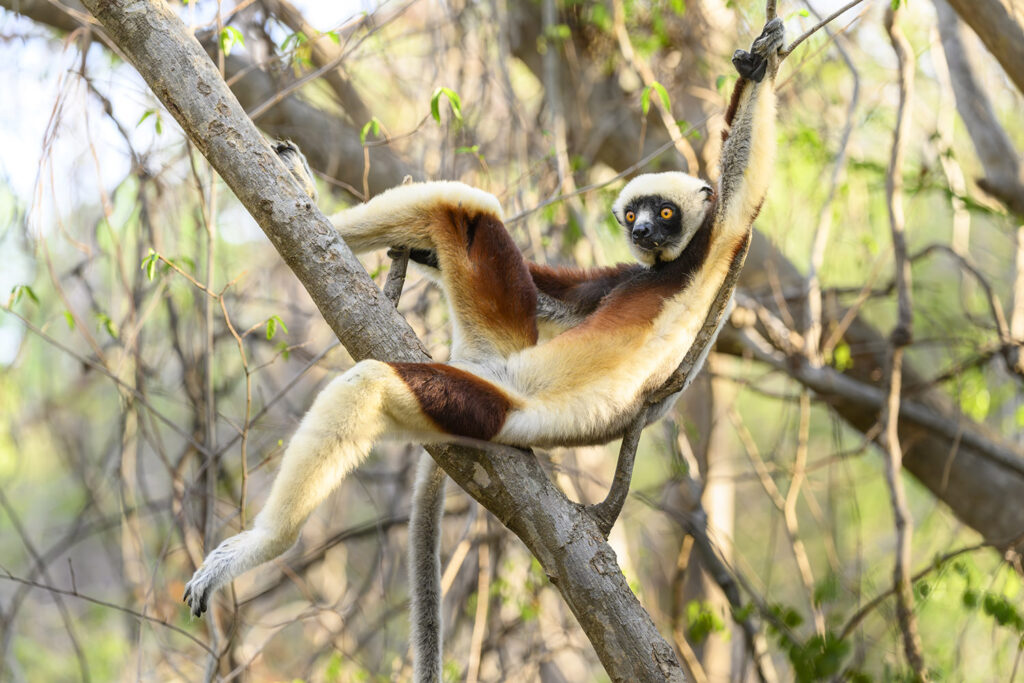
A lazy Coquerel's sifaka relaxes in the forests at Anjajavy © Nick Garbutt
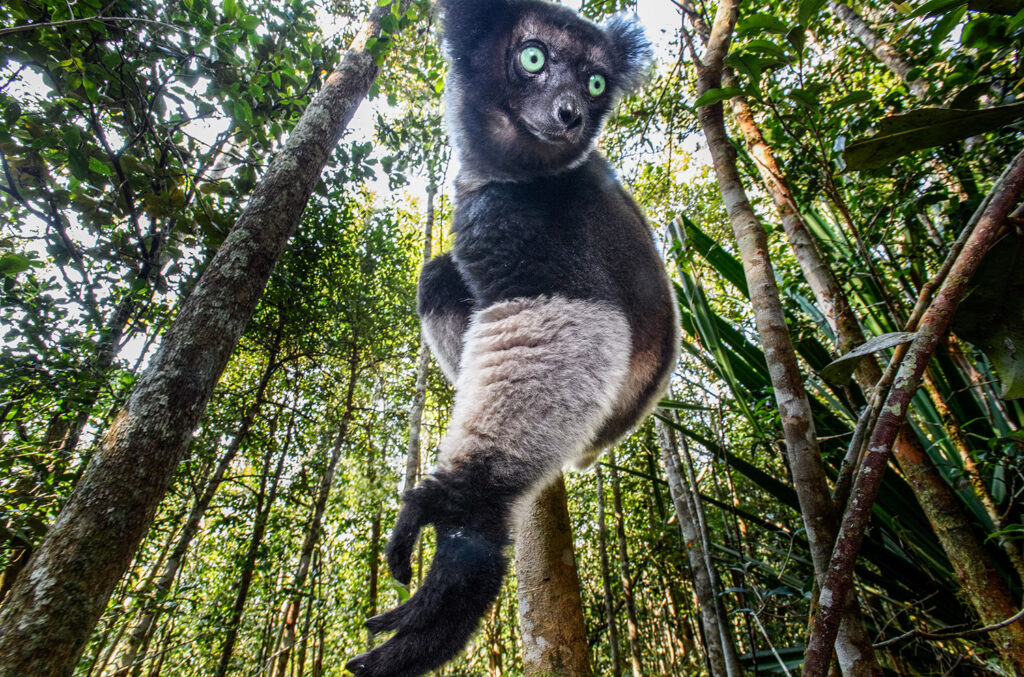
The largest of the extant lemurs, the indri in Andasibe-Mantadia National Park © Nick Garbutt
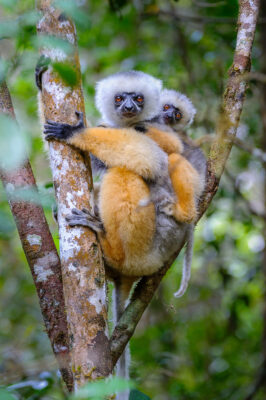
Female diademed siafaka with 3 months old infant © Nick Garbutt
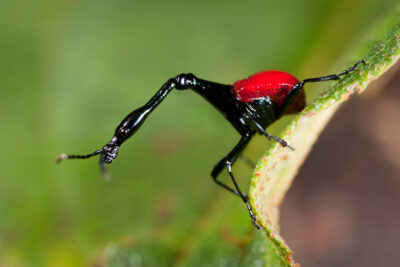
The bizarre male giraffe-necked weevil © Nick Garbutt
We then move onto the beautiful beach front Anjajavy l'Hôtel in the north-west, where we have a private reserve of dry deciduous forest and picturesque coastline on our doorstep. Within the grounds of our lodge and in adjacent forests, stunning Coquerel’s sifakas and brown lemurs leap between the trees and after dark diminutive mouse and sportive lemurs can be seen. There are also numerous chameleons and other reptiles to see, together with a large number of endemic birds such as crested coups, sickle-billed vangas and the extremely rare Madagascar fish-eagle.
At this time of year, we can enjoy maximum wildlife activity with baby lemurs clinging to their mothers, chameleons can be found lower in the trees, the endemic birds defend their breeding territories and the austral summer active species like tenrecs, frogs and dwarf lemurs all emerging from their winter torpor.
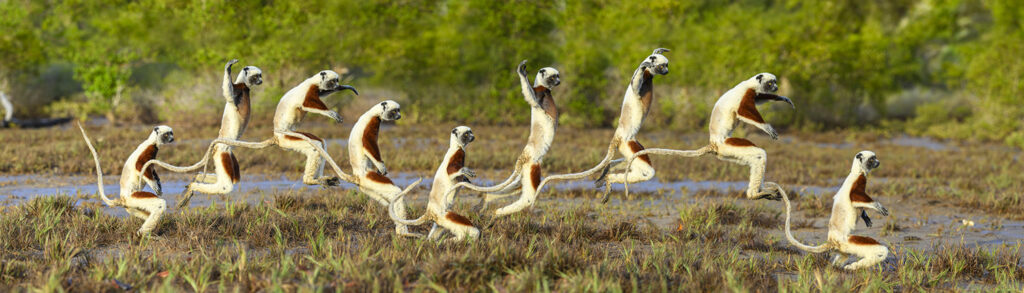
A Coquerel's sifaka bounds across open ground between forest patches at Anjajavy © Nick Garbutt
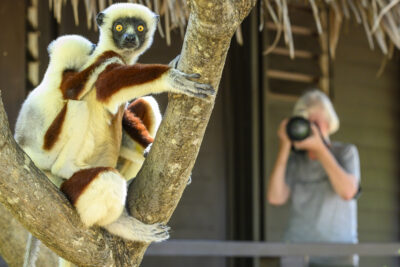
Beautiful Coquerel's sifakas are daily visitors to the grounds and forests immediately adjacent to the lodge at Anjajavy © Nick Garbutt
Accompanied by a team of expert guides, including Nick Garbutt, Mark Carwardine, Mike Dilger and Nick Mackman, we'll be treated to a unique wildlife extravaganza in a destination like no other.
Photography Equipment
A variety of equipment is useful, from close focus wideangle e.g. 16-35mm for forest scenes, to macro e.g. 105mm for chameleons, frogs and insects, to telephoto, e.g. 100-400mm for lemurs and birds. Flash equipment very useful. A tripod is advisable.
Click: contact Wildlife Worldwide to book this tour
Nick and Madagascar
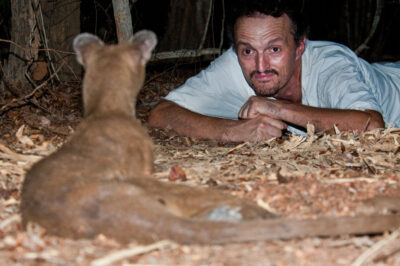
Who is looking at who? Nick with a female fosa © Nick Garbutt
Nick is well-known as a leading authority on the wildlife of Madagascar. He first visited the island in 1991: with £200 in his pocket and 60 rolls of film, he spent a month back-packing and exploring four of the parks and reserves. Over the past 30 years, he has returned most years and in doing so has travelled the length and breadth of the island many times, visited all the major national parks and reserves and has seen 80% of the island's lemurs (now more than 100 species) and a very high proportion of the other native mammals and endemic fauna in the wild.
He has written several books on the island's wildlife, including the new and massively expanded Handbook of Mammals of Madagascar (Bloomsbury / Princeton UP 2023), plus Madagascar Wildlife: A Visitor's Guide (5th edition, 2023) and Chameleons. His enthusiasm for the country and its natural history remains undiminished and infectious.

Female sword-billed hummingbird © Nick Garbutt
Dates: 8th - 27th January 2027
Price: £11,495 (Twin-share: Flights inclusive)
Price: £10,695 (Twin-share: Land Only)
Maximum Group 12
Current Availability: places remain, please enquire
LEADERS: Nick Garbutt & Alex Hyde
GRADING: Moderate. A variety of conditions from hot, humid lowland rainforest, to higher elevation cool cloud forests. Walks generally short to medium length (1-2km), but hills can be moderate to steep and uneven under foot, particularly in cloud forest areas. Early morning and late evenings as there are night walk options. High altitude in some locations e.g. Quito can affect some people.
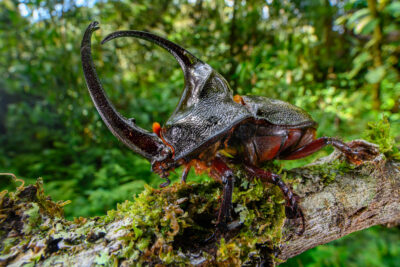
Adult male two-horned rhinoceros beetle or elephant beetle, sometimes encountered in cloud forest locations © Nick Garbutt
Ecuador is an amazingly rich, diverse and rewarding wildlife and photography destination. Lying on the equator, straddling both the east and west slopes of the Andes and encompassing the western extreme of the Amazon Basin, Ecuador supports 15% of the world's known bird species and in the Ecuadorian Amazon, live over 30% of all bird species in Amazonia.

Spectacular scarlet macaws gather at a clay-lick off the Napo River © Nick Garbutt
But such staggering levels of diversity alone do not necessarily make for a prime photographic destination; the accessibility of the wildlife is also key. Here Ecuador also scores very highly. Locations chosen for this tour include some of the most astonishing hummingbird sites on earth, where literally dozens of species can be seen and photographed and an Amazonia location that is very different in character, but offers a range of excellent options and sites that are particularly rich in reptiles, amphibians and invertebrates, while also supporting good populations of primates and birds.
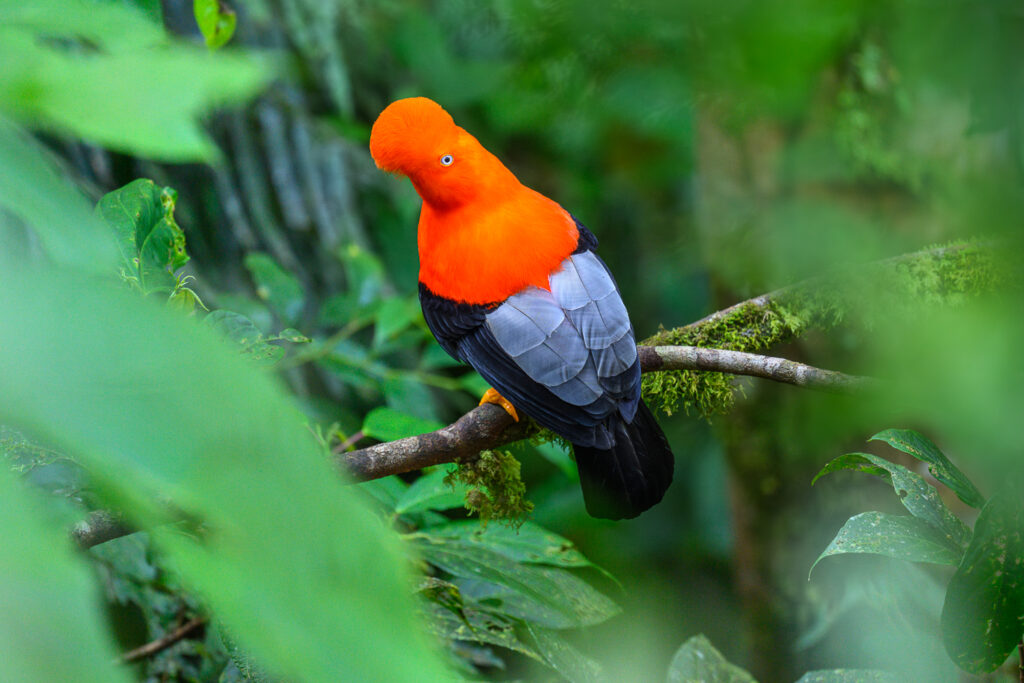
The Andean cock-of-the-rock can be seen a lek sites in cloud forests near Mindo and Sumaco © Nick Garbutt
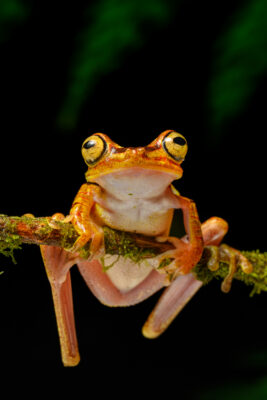
An Imbabura or golden-nugget tree frog on the western Andean slope of Ecuador © Nick Garbutt
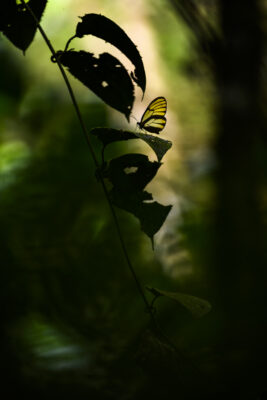
A long-winged or Heliconius butterfly rests in a pool of sunlight © Nick Garbutt
We then head to the high elevations of the Andes and the paramo habitats near Antisana National Park. Here, with luck we may see Andean or spectacled bears and Andean condors riding the thermals around the peaks. Other higher-elevation specialists include the giant hummingbird, and we will hopefully also have the opportunity to photograph the utterly amazing sword- billed hummingbird, which in relation to body size, has the longest beak of any bird.
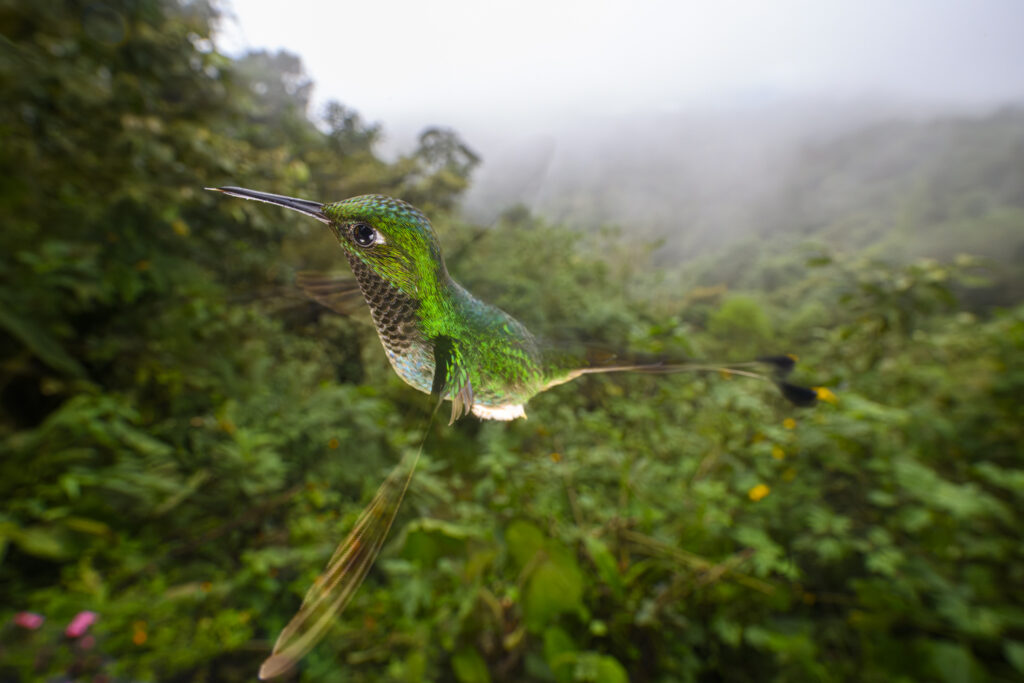
A male booted racket-tail hummingbird in cloud forest near Mindo © Nick Garbutt

The plate-billed mountain toucan is a stunning but shy resident of higher-elevation forests © Nick Garbutt

Early morning mist over rainforest. Buffer zone of Sumaco National Park © Nick Garbutt
We conclude our tour by traversing the Continental Divide to the cloud forests on the western slopes of the Andes. Here the forests are noticeably different to their counterparts on the eastern slopes, so the species composition is different and therefore a wealth of new and enthralling subjects await. Not only is the cloud forest incredibly rich, but it also exhibits extremely high levels of endemism. Our lodge andthe surrounding areas are prime places to see numerous new hummingbird species, tanagers, toucanets, mountain toucans and toucan barbets amongst many other birds. There are also glass frogs and a variety of reptiles.
The subject matter and photographic opportunities on this tour will be broad. In all locations we will spend time looking for the more accessible wildlife like frogs, reptiles and insects which lend themselves to macro techniques. Bird and mammal photography will be more opportunistic, but is certainly rewarding, especially from canopy platforms. In the Andean slope locations, there will also be time to get to grips with hummingbird photography, including various aspects of using flash.
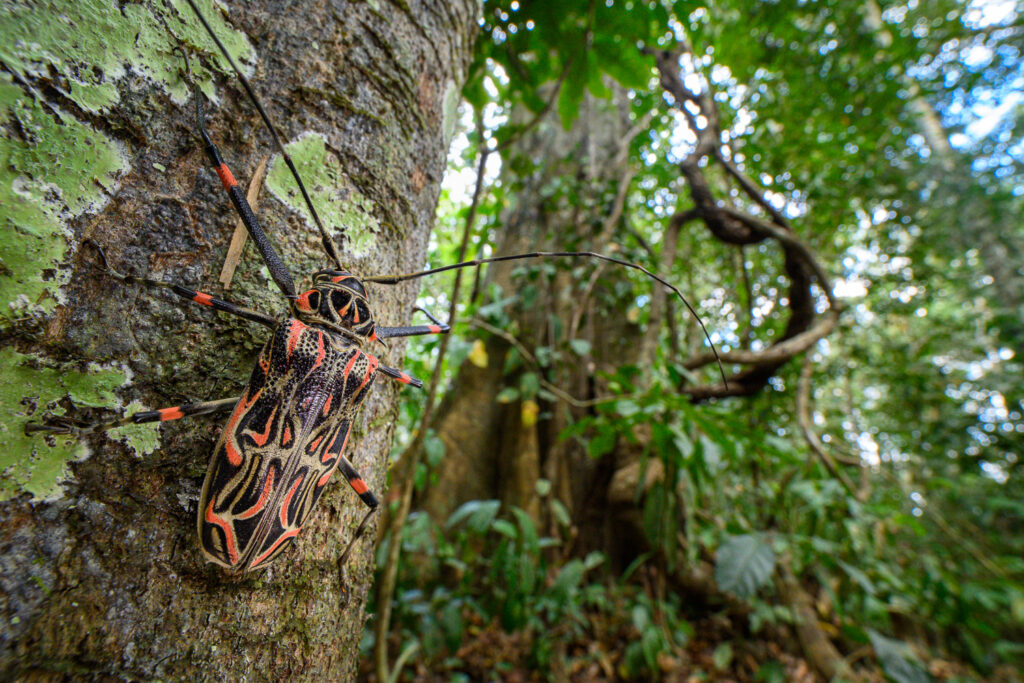
A female Harlequin beetle makes an idea subject for a wide angle composition in the rainforest understorey. Taken with a Laowa 15mm macro lens and a trace of fill-in flash © Nick Garbutt
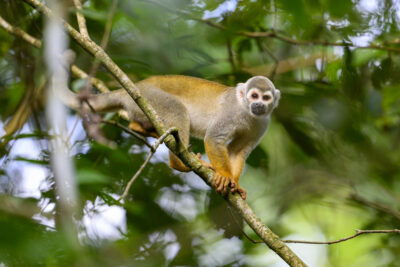
An inquisitive male squirrel monkey in the Amazon © Nick Garbutt
Why a Workshop?
Tropical rain forests are the greatest expressions of life on the planet and serve up a wonderful array of species, but they are also amongst the most challenging places to take photos successfully. As such rain forest locations lend themselves ideally to workshop format tours, where fewer places are visited but more time is spent in the chosen locations than would otherwise be the case on a 'regular' tour.

Osborne’s lancehead pit-viper in the forest understorey © Nick Garbutt
For this workshop, hosted by two leaders with a wealth of rain forest and macro photography experience, extended stays in several of Ecuador's prime locations have been chosen to maximise the photographic potential. In addition, the diversity of these sites offers the opportunity to introduce and teach numerous general photography and specialist macro and lighting techniques, such that participants gain as much insight as possible which hopefully helps move their photography onto the ‘next level’.
Photography Equipment
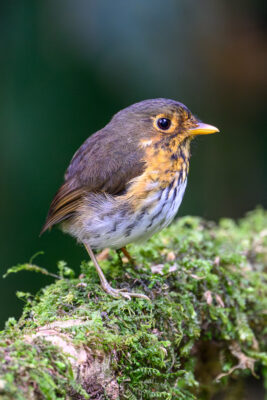
An ochre-breasted antpitta on the forest floor. Sumaco National Park © Nick Garbutt
As with most rainforest trips, a variety of focal length lenses are useful, from close focusing wide angle e.g. 14-24mm or 16-35mm, to short-tele macro e.g. 105mm, to longer telephotos, e.g. telephoto zoom 100-400mm. These will cover most situations with invertebrates, frogs, reptiles and some mammals and birds. Flash equipment very useful, especially with off-camera capability and in conjunction with a diffuser or ‘soft box’. A longer telephoto e.g. 500mm or 600mm is better for birds and mammals. Waterproof protection for camera gear is highly recommended. And a tripod is advisable.
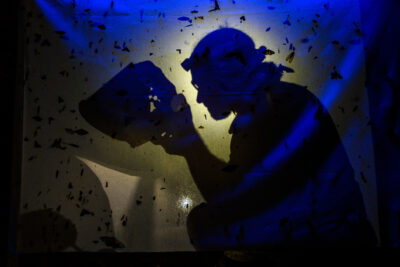
Alex is arguably the UK's best macro photographer. At several locations we take advantage of lodge moth traps that attract a vast array of subjects © Nick Garbutt
Alex Hyde
I am delighted to be joined by good friend Alex Hyde on this trip. Alex is one of the UK's finest exponents of macro photography, combining the best of art and science into his exquisite images. He is a master of the technical aspects of digital photography and in the field or indoor workshop environment has the enviable skill of being able to convey challenging topics and ideas, concisely, simply and in a way that makes them understandable. To see more of Alex's stunning work click here
Click: contact Wildlife Worldwide to book this tour
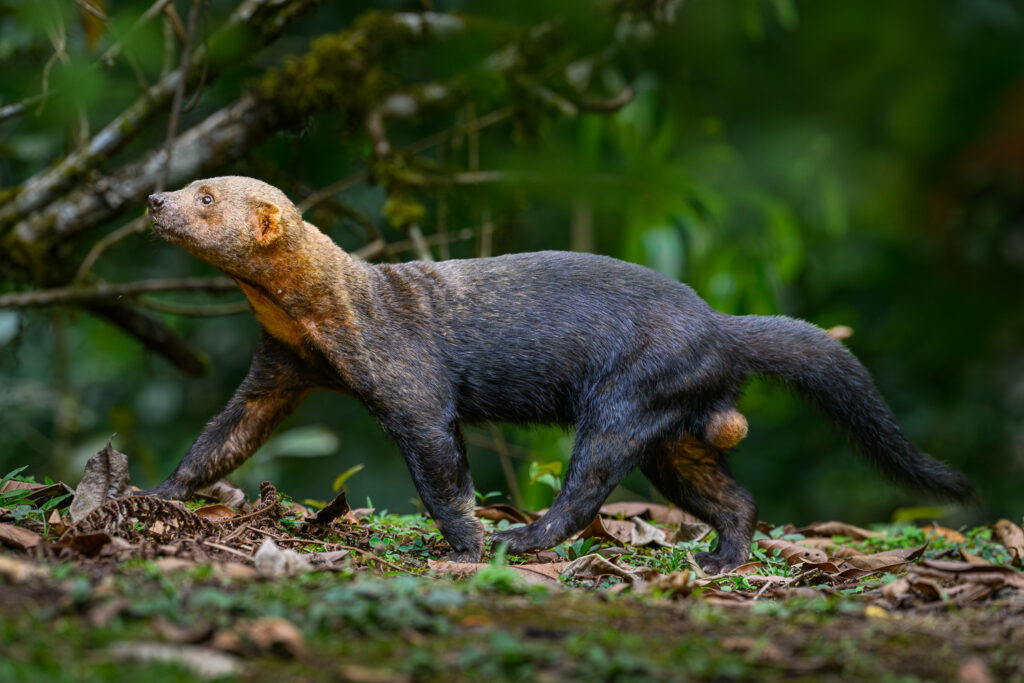
The tayra - a large relative of the weasel - is generally difficult to see, but does occasionally visit some cloud forest lodges, especially if food is put out for birds © Nick Garbutt
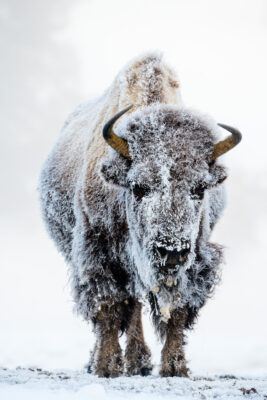
A frost covered bison stands in in temperatures around -25˚C near Midway Geyser Basin © Nick Garbutt
Dates: 9th - 24th February 2027
Price: £13,995 (Twin-share: Flights inclusive)
Price: £12,995 (Twin-share: Land Only)
Single Supplement: Please enquire
Maximum Group 10
Current Availability: FULL
Dates: 7th - 22nd January 2028
Price: £TBC (Twin-share: Flights inclusive)
Price: £TBC (Twin-share: Land Only)
Single Supplement: Please enquire
Maximum Group 10
Current Availability: please enquire
Click for further details
Read tour report 2016
Read tour report 2018
Grading: Easy to Moderate
Cold to very cold, expect temperatures between 0˚C and - 15˚C, occasionally below - 20˚C, and even down to - 30˚C (- 38˚C is the coldest we’ve experienced). Primarily vehicle based, but all photography is from outside, but close to the vehicle. Some short walks. Underfoot, snow and ice.

In winter, moose are relatively rare inside the Park, as most migrate to lower elevations where the prospects for browsing are better. However, a handful of individuals sometimes remain in one or two areas, where willows are common: one such prime area is around Pebble Creek in the Soda Butte Valley © Nick Garbutt
Yellowstone was the world's first national park (established in 1872) and remains as breathtaking as ever. It is North America's playground, especially in the summer (around 1.5 million visitors per year). Its grandeur is unquestionable at any time, but in the depths of winter the landscape takes on an ethereal harsh beauty. And there are far fewer people - a tiny fraction of the great summer throng.
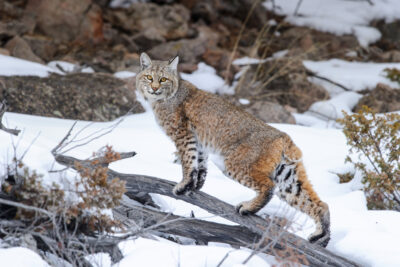
Sightings of bobcats happen from time to time, especially along the Madison River Valley © Nick Garbutt
The juxtaposition of fairytale frosts, ice and snow with swirling mists and rising steam from countless hot springs and geysers (the park contains half of the world's geothermal features) creates a landscape laden with atmosphere, mystique and photographic inspiration and opportunity. There is no where else on Earth quite like it.

A bull bison picks at meagre grazing on a very frosty morning along the Firehole River with Midway Geyser Basin in the background © Nick Garbutt
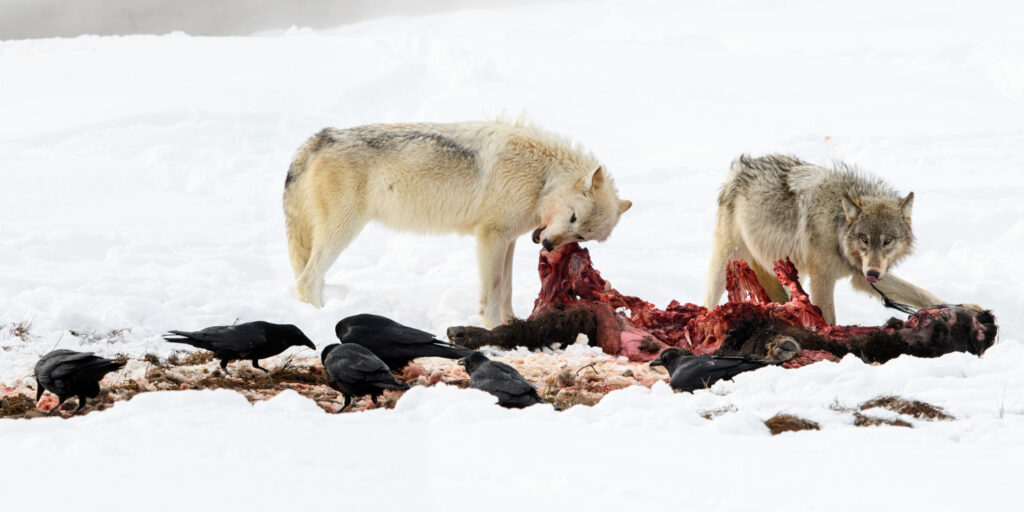
A pack of wolves feeding on a bison carcass: close sightings like this are rare and obviously thrilling © Nick Garbutt
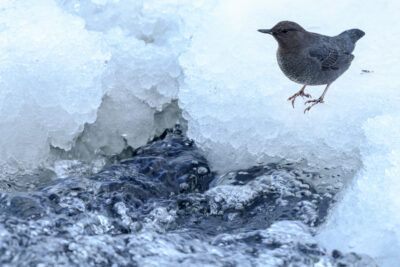
An American dipper on the edge of the frozen Upper Yellowstone River © Nick Garbutt
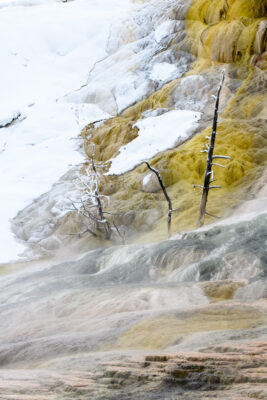
A group of petrified trees at Mammoth Hot Springs © Nick Garbutt
The Greater Yellowstone ecosystem is widely considered to be the finest wildlife area and habitat in the Lower 48 States. In the grip of winter large numbers of bison can be seen grazing in open area, on the edge of woodlands and around hot springs, and in the sheltered valleys it is possible to encounter coyotes, red fox, elk, and pronghorn antelope. In the more exposed areas bighorn sheep are often seen and way up high on precipitous cliffs, mountain goats might be seen.
This tour initially concentrates in the north western corner of Yellowstone, known at the Northern Range, an area that includes Mammoth Hot Springs and famous wildlife locations like the Lamar Valley.
The Lamar Valley and adjacent areas, in the north east corner of the park, are amongst the best places to see wolves. A number of packs that frequent the vicinity, although their movements vary considerably from year to year with changes in pack dynamics. Research teams are out daily to track wolf whereabouts and if good sightings are possible they are always happy to help.
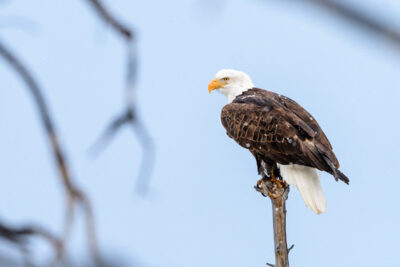
A bald eagle perched on the banks of the Upper Yellowstone River © Nick Garbutt
We then move to the spectacular Madisons and Firehole River Valleys, where there is the greatest concentration of geothermal features, and herds of frost-covered bison stand by steaming springs and numerous geysers, like 'Old Faithful', 'Castle' and 'Lone Star' erupt with predictable regularity. We explore these areas using over-snow vehicles and also on foot at times. The wildlife encounters, particularly along the rivers are often aplenty and the photographic opportunities are almost endless.
Along the Madison River valley bison and bald eagles are regularly encountered and bobcats are occasionally seen hunting waterfowl along the river margins.
Arguably the tour highlight is the final four days where we stay in the center of the park near the Grand Canyon of the Yellowstone, based at a Yurt Camp nestled amongst dense conifer forest. This is the only permanent winter accommodation within the vicinity and allows unprecedented and sole early-morning and late-afternoon access to some of the most scenically spectacular and wildlife-rich areas in the park. Using over-snow vehicles we will visit the most dramatic locations like the Canyon itself, the stunning beautiful Hayden Valley, and Yellowstone Lake.
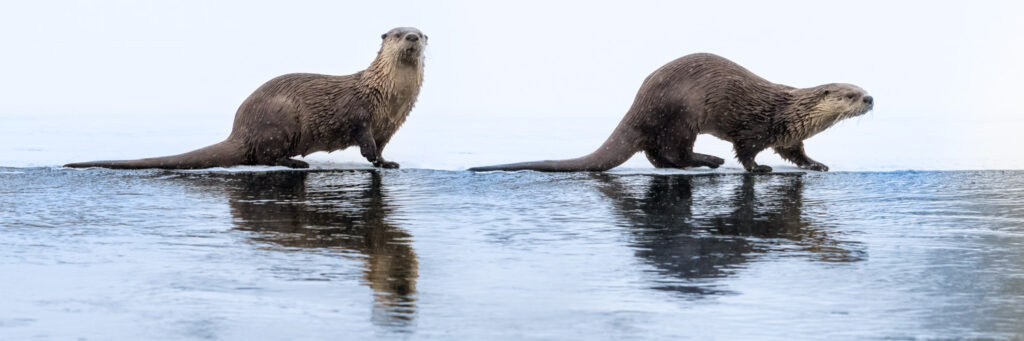
A pair of North American river otters on the edge of the Upper Yellowstone River © Nick Garbutt
Along the Upper Yellowstone River, it is possible to see river otters, beavers and several species of waterfowl, while the Hayden Valley can be especially rewarding for herds of bison, coyotes and red foxes hunting for rodents.
The cosy Yurt Camp provides a comfortable homely base and offers the opportunity to explore the areas close at hand, by snow-shoe and for those who wish on cross-country skis, including trails around the rim of the Grand Canyon of the Yellowstone. From the rim it is occasionally possible to see an amazing ‘sun pillar’ - a spectacular optical phenomenon that occurs under very specific conditions just after sunrise.
Photography Equipment
For wildlife, mainly telephoto: a lens of at least 400mm, ideally 500mm + is recommended. Short telephoto, eg. 70-200mm and wideangle lenses, e.g. 24-120mm for wildlife in habitat shots, geo-thermal features and landscapes.
Click: contact Wildlife Worldwide to book this tour
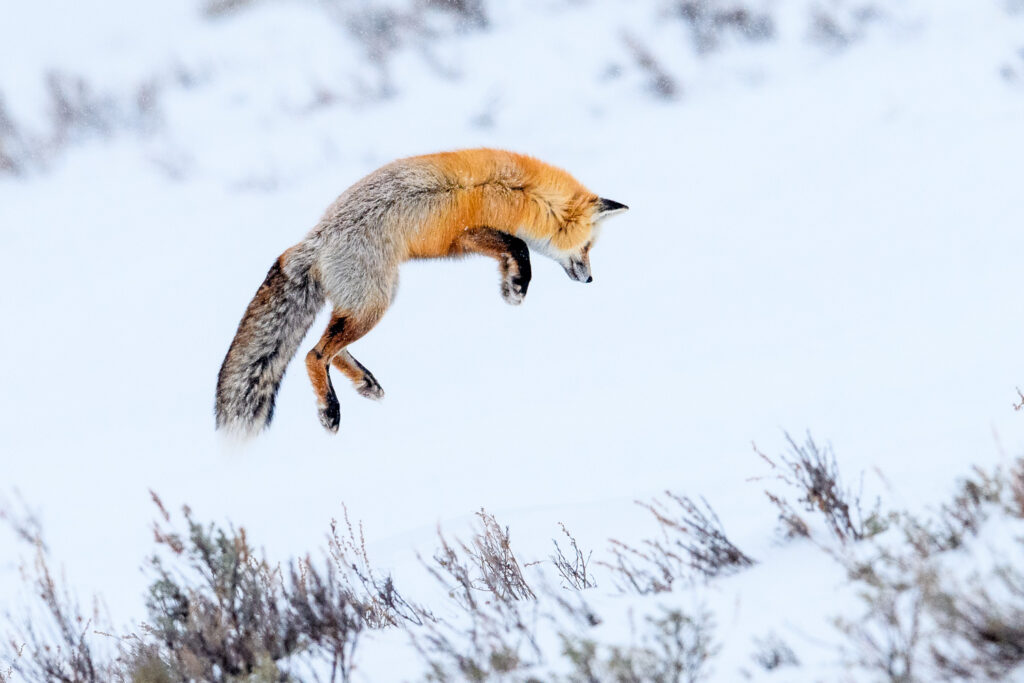
A red fox 'snow diving' for rodents in the Hayden Valley © Nick Garbutt

A dramatic sun pillar just after sun rise over the Grand Canyon of the Yellowstone. This spectacular phenomenon occurs when direct rays of light hit hexagonal ice crystals hanging in the air that form when the temperature drops to between -17°C and -25°C © Nick Garbutt
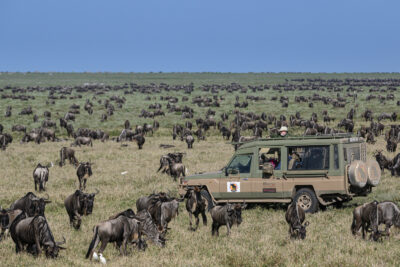
The short grass plains swarming with wildebeest © Nick Garbutt
Dates: 19th March - 2nd April 2027
Price: £14,795 (Twin-share: Flights inclusive)
Price: £14,095 (Twin-share: Land Only)
Single Supplement: please enquire
Maximum Group 8 (2 vehicles, max 4 clients, plus 1 TL in each)
Current Availability: places remain, please enquire
LEADERS: Nick Garbutt & Chris Breen
Click for further details
GRADING: Easy. Entirely vehicle-based. The only walking is around lodges. Early mornings every day, approx. 5.30am starts and some long days, 10+ hours in the field.
The annual migration of wildebeest, zebra, gazelles and other ungulates around the Serengeti-Masai Mara ecosystem is one of the world's greatest wildlife wonders and serves up endless excitement and photographic inspiration. Involving over 3 million animals, the spectacle is an ongoing event with the herds constantly on the move in search of the best pasture and grazing.
Herd movements are governed by the cycle of rains, which dictate that the animals follow a reasonably predictable annual routes around the vast ecosystem. Between January and April the rains bring the herds, in their hundreds of thousands, to the fertile, calcium-rich short grass plains of the southern Serengeti. Here, around a million female wildebeest give birth to their calves, with around 90% being born in February.

The short grass plains of the southern Serengeti are arguably the best place there is to see cheetahs and there is a very realistic chance of witnessing them hunting © Nick Garbutt

The Ngorongoro Crater is home to a healthy population of black rhinos © Nick Garbutt
Witnessing this is one of the "must see" events of the natural world: it is a spectacle that never fails to captivate and set the pulse racing. Sightings and photographic opportunities on each trip are very different - with considerable year-by-year variation - but there are always many special encounters and the events witnessed that live long in the memory.
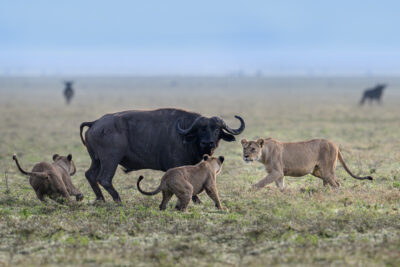
The Crater supports several prides of lions, with early morning often being the best time to see them active. Here a lioness and young males harass a bull buffalo © Nick Garbutt
We begin by visiting the Ngorongoro Crater: no trip to northern Tanzania would be complete without visiting this natural wonder. It is East Africa in microcosm: an exceptional place where tolerant and varied wildlife can be viewed in close proximity.
The Crater is one of the best location to see majestic bull elephants, many still sporting impressive large tusks. In addition it is home to over 30 black rhinos, and this time of year (the green season) is one of the best times to see them as they emerge from dense cover and can be seen more often browsing in open areas. There are also several prides of lions that provide a constantly changing dynamic with the chance of witnessing interesting behaviours and interactions.
As always our photographic efforts concentrate around the early morning and late afternoon when the light and cloudscapes surrounding the Crater are often dramatic, where subjects can be set in context against an awe-inspiring backdrop of the steep Crater walls creating scenes of compelling grandeur.

A young male lion investigates an remotely triggered camera on the short grass plains near Ndutu © Nick Garbutt

The Ngorongoro Crater and Ndutu areas are potentially good places to see the elusive caracal © Nick Garbutt

Both greater and lesser flamingos often gather on Lake Ndutu © Nick Garbutt
The remainder of the tour concentrates on the short grass plains areas to the north and east of the Crater. For photographers the Ndutu area near the boundary of the Serengeti National Park and Ngorongoro Conservation Area consistently provides a stream of unrivalled opportunities for creating memorable images. Here the open plains are broken by extensive areas of acacia woodland with lakes and marshes that form focal points for the gathering herds and attendant carnivores.
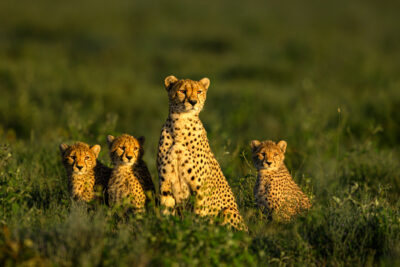
A female cheetah with cubs in early morning light near Ndutu © Nick Garbutt
This area is especially renowned for cats: it is arguably one of the very best places to see cheetahs hunting, there are several prides of lions resident in the area, and leopards are seen too. The smaller cats - serval, caracal and African wild cat - are also encountered, and it is quite possible to see all six East African felines on a trip. This tour makes the most of this very special place with an extended stay in the Ndutu area.
As a compliment (and new for 2027), we also stay in a remote mobile camp in the far east of short grass plains ecotone. After the relocation of a small number of Masai villages, these areas are now haven for wildlife, with large herds and attendant carnivores, including various cats resident during the rainy season. The views to the east over the Salei Plains are spectacular, with Ol Doinyo Lengai (Tanzania’s only active volcano) dominating the skyline.

A herd of giraffes wander across the Salei Plains with Ol Doinyo Lengai looming in the background © Nick Garbutt

In the rainy season, large herds of zebra, as well as wildebeest, gather on the plains at both Salei and Ndutu © Nick Garbutt
In both Salei and Ndutu, the capability to drive off-road is a crucial factor in making these areas so productive for photography. Through a combination of morning, afternoon and sometimes full-day game drives, there will be ample time to explore the immediate vicinity and potentially go further a field to follow the shifting herds and look for the cats and other predators.

At first light a dominant male lion patrols along Long Gully near Ndutu © Nick Garbutt
Photography on Tour
This itinerary involves a long stays at both Salei and Ndutu, which those not familiar with the areas may question: 'why do you spend so long in these places and not visit other areas?' is a question I am often asked. The answer is simple: they are the best photography locations. Ndutu serves up repeated and diverse top quality photographic situations, while Salei is a quiet corner that is diverse and very different. Not only is the wildlife very good in these locations, but also the capability to drive freely off-road and explore vast areas, while largely being alone, adds so much to the experience.

The grandeur of the Ngorongoro Crater cannot be over-stated, especially in the rainy season when the interplay of beautiful raking light and spectacular storm clouds help create dramatic skies © Nick Garbutt
With this in mind, I would suggest this tour is better suited to those who have already been to East Africa at least once previously, and who now want to concentrate on the quality of their photography, rather than quantity.
Photography Equipment
Mainly telephoto: a telephoto zoom e.g. 100-400mm or 100-500mm will serve for many situations, but longer lenses 500-600mm can come into their own. A shorter telephoto / wideangle lenses e.g. 70-200mm and / or 24-120mm are good for animals in context and wider landscapes. Bean bags are useful.
Click: contact Wildlife Worldwide to book this tour

Columns of running white-bearded wildebeest regularly provide opportunities to try motion-blur panning techniques © Nick Garbutt

A herd of white-bearded wildebeest cross Lake Ndutu © Nick Garbutt

Herds of zebra and wildebeest on the short grass plains near Ndutu © Nick Garbutt
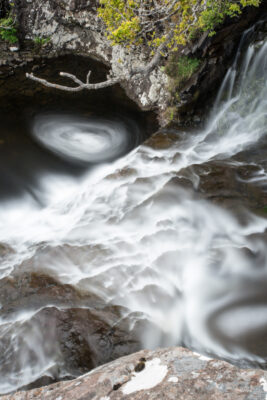
Using a very long exposure (5 minutes) to create something different at Eas Fors waterfall © Nick Garbutt
Dates: 11th - 18th June 2027
Price: £3295 (Twin-share)
Maximum Group 10
Current Availability: FULL
LEADERS: Nick Garbutt & Alex Hyde
GRADING: Easy. Short to moderate walks up to 1km (longer walks optional) and boat trips. Short, steep incline and uneven terrain and cliff edges on one coastal path. You must be able to carry your photography equipment on walks.
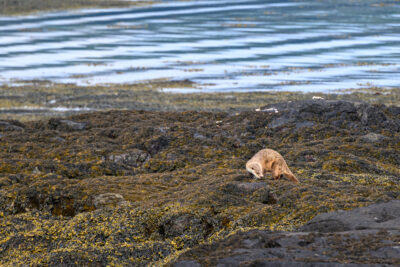
There is a good chance of seeing otters along the shoreline, but getting good photos can be a challenge © Nick Garbutt
For several years, Alex Hyde and myself (along with friend Chris Mattison) ran successful photography workshops to Mull. We were reluctantly forced to stopped because of changes in circumstances beyond our control that impacted on the quality of the trip. In conjunction with Wildlife Worldwide, we have now found solutions, so we are now able to offer these trips again, with significant improvements to the way they are run.
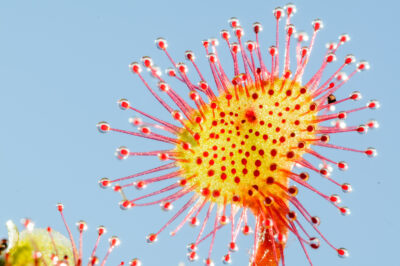
Close-up study of a round-leaf sundew © Nick Garbutt
The Isle of Mull offers some of the finest wildlife watching and photography options in the UK. From the comfort of Killiechronan House, near the shores of Loch Na Keal, we will experience the many facets of this beautiful island. Over the course of our week-long stay we will explore Mull, on foot, by vehicle and by boat and have the opportunity to try out and practice a variety of photographic techniques. With luck we should be able to capture images of a diverse range of birds, flowers, plants, habitats and, with luck, perhaps mammals.

A lovely house in a great location: our base, Killiechronan House on the shores of Loch Na Keal © Nick Garbutt
A boat trip to the neighbouring Treshnish Isles will take in the Isle of Staffa and Fingal’s Cave before moving onto the Isle of Lunga where there will be opportunity to spend time with and photograph at close quarters one of the UK’s most charismatic seabirds, the puffin, together with huge numbers of guillemots, razorbills, shags and fulmars. Lunga offers a ‘Galapagos” type experience, where tolerant endearing birds can surround you on all sides. We have arranged an extended stay on Lunga to maximize opportunities, if the weather is kind. During the voyage out to and back from the isles, there is a chance of also seeing basking sharks and possibly cetaceans like dolphins and minke whales.
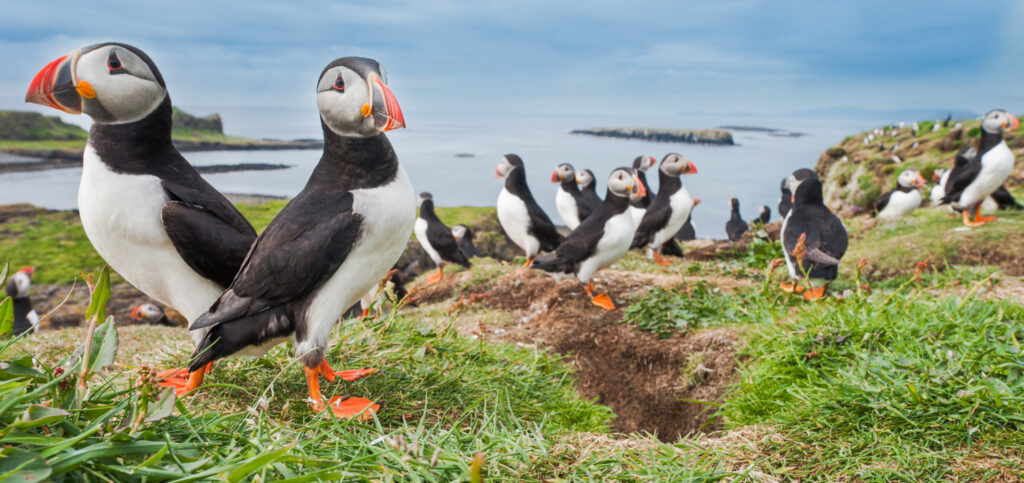
Lunga, one of the Treshnish Isles is home to some spectacular and accessible sea bird colonies: here puffins congregate on the cliff top © Nick Garbutt
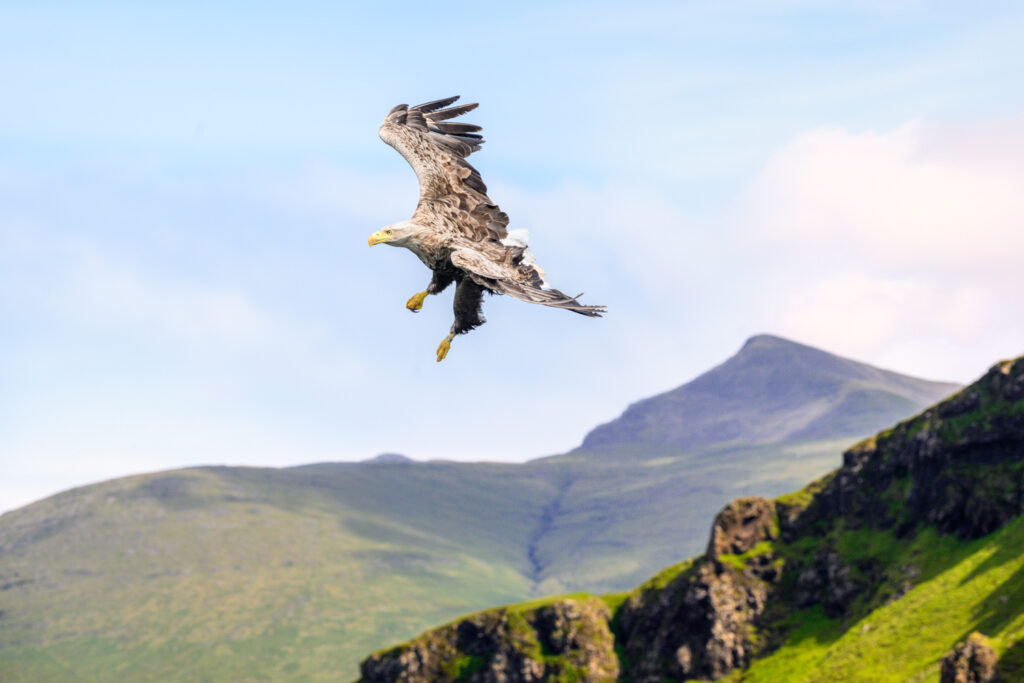
A white-tailed eagle with Ben More in the background © Nick Garbutt
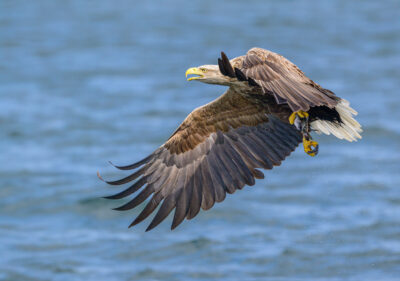
Seeing white-tailed eagles at close quarters is one of the trip highlights and provides some wonderful action photo opportunies © Nick Garbutt
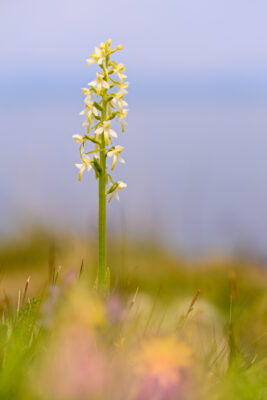
A lesser butterfly orchid on a cliff top © Nick Garbutt
A separate half day exclusive boat charter will provide opportunities to photograph spectacular white-tailed eagles, as well as perhaps both harbor and grey seals. This excursion around the in-shore waters of Loch Na Keal, often also reveals huge aggregations of moon jellyfish, which can provide some unexpected photo opportunities. We will also visit the charming Isle of Ulva, a haven for seals, otters and a variety of other wildlife. The island also offers plenty of macro photography opportunities with over 500 species of plant recorded including several rare orchids alongside some stunning sea-shore life.
With exclusive use of Killiechronan House, this trip to Scotland’s 'Eagle Island' offers a wealth of experiences and the opportunity to advance your photographic skills and repertoire.
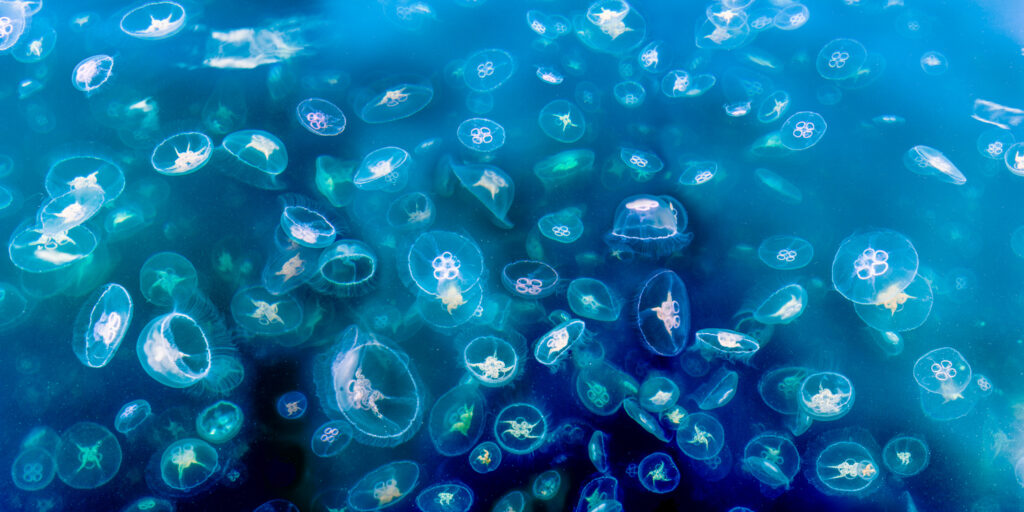
Summer sometimes brings huge swarms of moon jellyfish into Loch Na Keal. In calm conditions they can be photographed through surface © Nick Garbutt
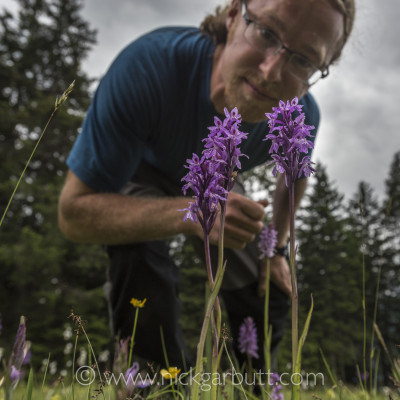
Alex Hyde and Broad-leaf Marsh Orchid
Photography Equipment
Mainly macro and wideangle, with some telephoto. A standard macro lens e.g. 105mm and close-focus wideangle are required for sea shore, plants and invertebrates. Also a telephoto zoom e.g. 100-400mm or 500mm for white-tailed eagles, sea birds and some flowers. A tripod is recommended.
Alex Hyde
I am delighted to be joined by good friend Alex Hyde on this trip. Alex is one of the UK's finest exponents of macro photography, combining the best of art and science into his exquisite images. He is a master of the technical aspects of digital photography and in the field or indoor workshop environment has the enviable skill of being able to convey challenging topics and ideas, concisely, simply and in a way that makes them understandable. To see more of Alex's stunning work click here
Click: contact Wildlife Worldwide to book this tour
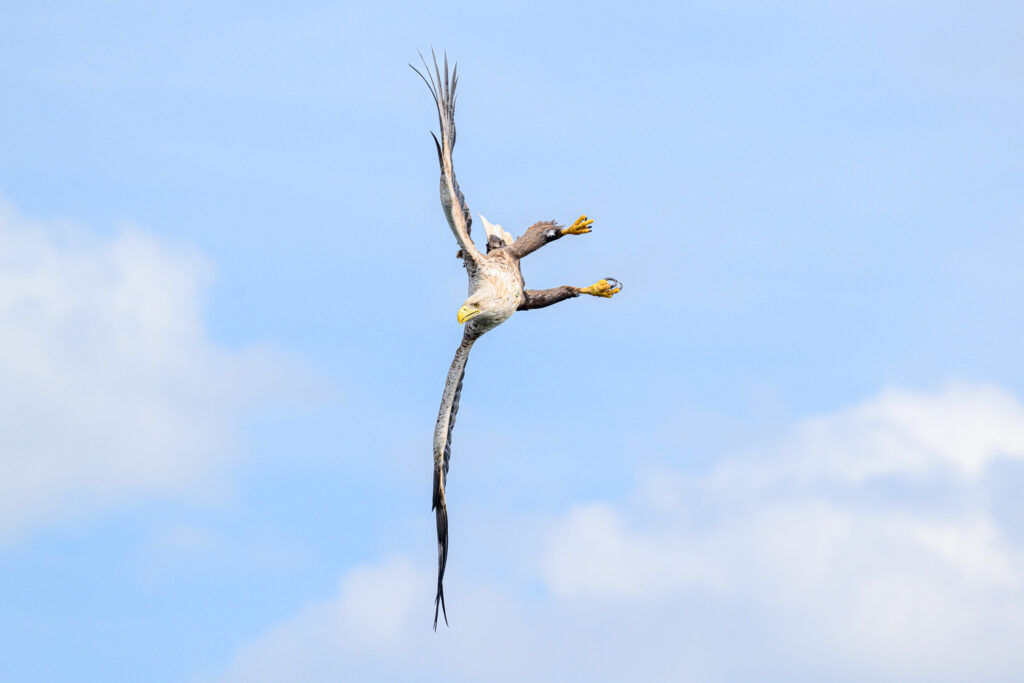
The agility and acrobatic capabilities of a white-tailed eagle on full display © Nick Garbutt

A cluster of trumpet gentians growing in high-Alpine zone © Nick Garbutt
Dates: 23rd - 30th June 2027
Price: £3395 (Twin-share: Flight inclusive)
Price: £3145 (Twin-share: Land Only)
Maximum Group 10
Current Availability: Please enquire
LEADERS: Alex Hyde & Matt Clarke
Dates: 17th - 24th June 2028
Price: £TBC (Twin-share: Flight inclusive)
Price: £TBC(Twin-share: Land Only)
Maximum Group 10
Current Availability: Please enquire
LEADERS: Alex Hyde & Nick Garbutt
Click for further details
GRADING: Easy to Moderate. Very early morning starts (5am) most days. Mostly short walks, but some longer walks 2-3km (including modest uphill) carrying your photography equipment. Most locations are within easy reach, requiring a short drive and a walk. Cable car rides, followed by walks allow us to access some sites at higher elevations.

The diversity of orchids in Alpine meadows is stunning and provides endless photographic opportunities. These are all focus stacked images to maximise detail in the subject, whist maintaining a soft out-of-focus foreground and background. From left to right: lesser butterfly orchid, black vanilla orchids, fragrant orchids and burnt-tip orchids © Nick Garbutt
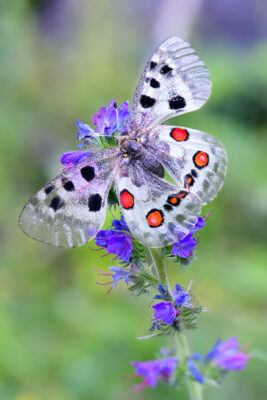
A roosting apollo butterfly: this is a focus stack © Nick Garbutt
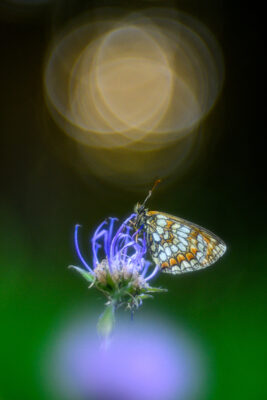
A heath fritillary resting on round-headed rampion. Photographed at sunrise with a wide open aperture to produce the interesting bokeh © Nick Garbutt
June sees the alpine meadows of the Austrian Tyrol in their full glory. They are flushed with a spectacular show of wild flowers, and an equally stunning array of butterflies and other insects (although year-on-year seasonal variation introduces unpredictability). This is the perfect time to visit for our macro photography tour.
We will explore the many and varied meadows and discover a rich flora and along the way encounter many exciting and beautiful insects that flourish on these alpine slopes. In some of the locations we visit there is a good chance of finding the iconic apollo butterfly, as well as swallowtails, and various fritillaries and blues. Moving higher up the slopes, the colourful meadows give way to swathes of vibrant alpenrose and high alpine species such as dwarf snowbell, mountain primrose and trumpet gentian.
The tour has been designed with an emphasis on macro techniques, but also incorporating general and landscape photography elements. Whether a beginner or a seasoned photographer, you will benefit from the tutors’ guidance and experience. We will be looking at all aspects of macro photography from the basics through to advanced techniques like focus stacking.

This goldenrod crab spider was photographed with a Laowa ultra-macro 24mm probe lens. This extreme close-focus lens (and the Kuangren K42 and K150) are the only optics that allow such small subjects to dominate the frame, while simultaneously showing plenty of background and environment, in this instance a glorious Alpine flower meadow © Nick Garbutt

A group of burnt-tip orchids photographed with a telephoto lens through a veil of out-of-focus flowers and foliage © Nick Garbutt

Early morning is the best time to find roosting butterflies in the meadows: a large blue with a second individual behind, amongst meadow clary © Nick Garbutt

A meadow full of ox-eye daisies © Nick Garbutt
In addition there may be indoor workshops (especially if the weather is poor) including advice on digital workflow. You will learn how Adobe Lightroom and Photoshop techniques can complement your field skills and let you get the most from your digital camera.
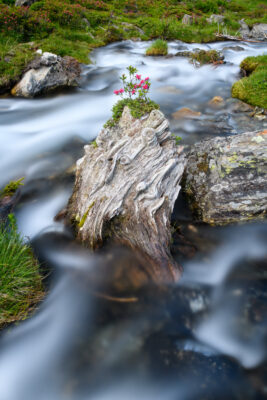
The Urgsee is a spectacular wild Alpine valley: here an alpenrose sapling is growing on ancient tree stump © Nick Garbutt
A friendly family-run hotel provides the perfect base for our week of photography and fresh mountain air. Flexible transport arrangements mean that we can make best use of the light. A short drive takes us to an extensive cable car network, making access to high mountain scenery and plants easy.
Photography Equipment
Mainly macro and wideangle, with some telephoto. A standard macro lens e.g. 105mm and close-focus wideangle are key in flower meadows. More specialist macro lenses e.g. Laowa probe macro and ultra-macro lenses are optional. A focus rail is also useful with ultra-macro lenses. Also a telephoto zoom e.g. 100-400mm or 100-500mm for butterflies and some flowers. A tripod is essential, while a diffuser panel is a useful addition.
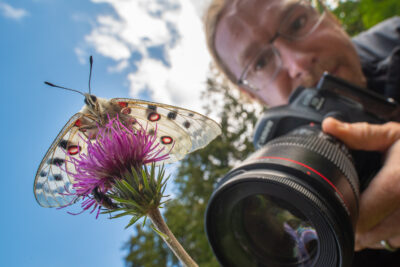
Alex working on a composition with an apollo butterfly © Nick Garbutt
Alex Hyde
I am delighted to be joined by good friend Alex Hyde on this trip. Alex is one of the UK's finest exponents of macro photography, combining the best of art and science into his exquisite images. He is a master of the technical aspects of digital photography and in the field or indoor workshop environment has the enviable skill of being able to convey challenging topics and ideas, concisely, simply and in a way that makes them understandable. To see more of Alex's stunning work click here
Click: contact Wildlife Worldwide to book this tour

Low, soft early morning back lighting, combined with a wide aperture helped create a slightly ethereal quality with this silver-studded blue roosting in a meadow © Nick Garbutt

Eurasian smoothwing or pied hoverflies gather on field scabious. Taken with a Laowa 24mm probe lens © Nick Garbutt
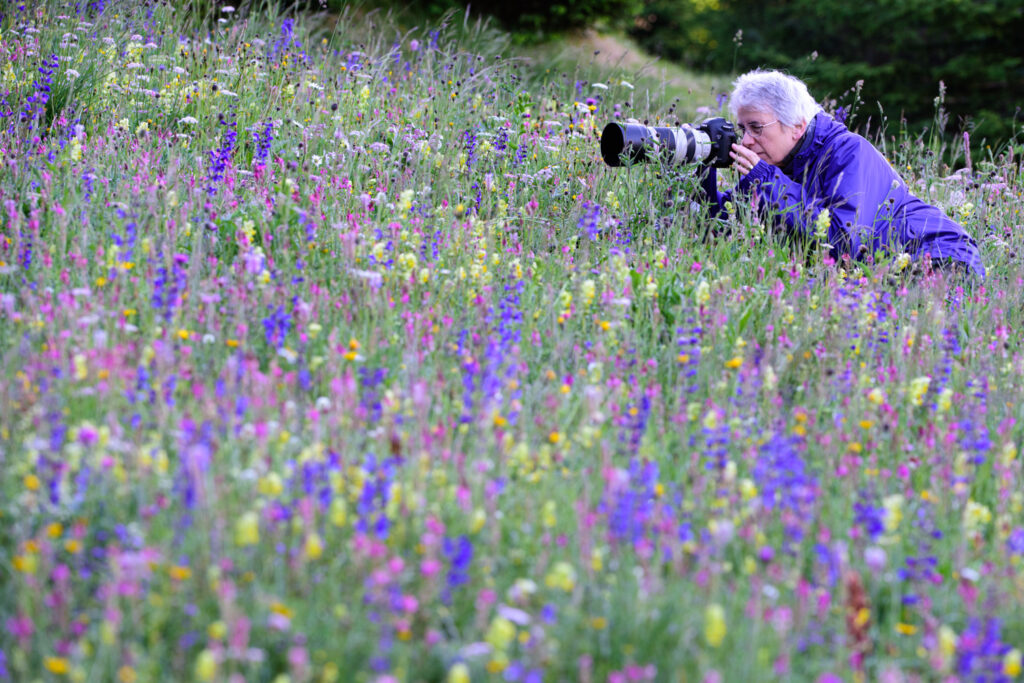
Captivated by the floral splendour of an Alpine meadow - one of our clients immersed in their photography © Nick Garbutt
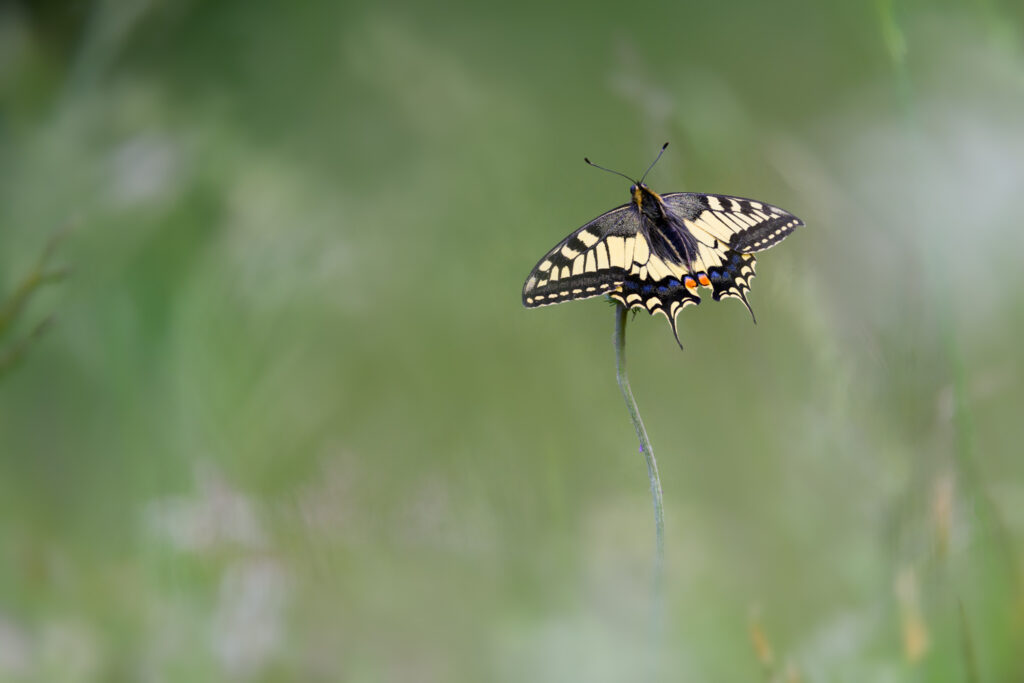
A common swallowtail butterfly: using a long telephoto lens and wide aperture helped create maximum blur to both out-of-focus foreground elements and the background, such that they become indistinguishable © Nick Garbutt

A male puma walks through dense snow covered bushes © Nick Garbutt
26th June - 11th July 2027
Price: £14,995 (Twin-share: Flights inclusive)
Price: £13,995 (Twin-share: Land Only)
Single Supplement: £850
Maximum Group 8
Current Availability: FULL
1st - 16th July 2028
Price: £16,395 (Twin-share: Flights inclusive)
Price: £15,295 (Twin-share: Land Only)
Single Supplement: £950
Maximum Group 8
Current Availability: FULL
Grading: Moderate to Challenging
A good level of fitness is required for this trip as there are likely to be some stiff walks. Some puma viewing is close to the roads or near the vehicles, however, there is often the necessity to walk anywhere between 2km and 10km during the course of a day, over uneven terrain with steep hills, while carrying your camera gear. Days in the field are long, typically leaving the lodge around 8.30am (when it’s still dark) and returning at dusk, around 6.30pm. Expect temperatures to be below zero, typically O°C to -10°C, and sometimes as low as -20°C, especially early in the morning.
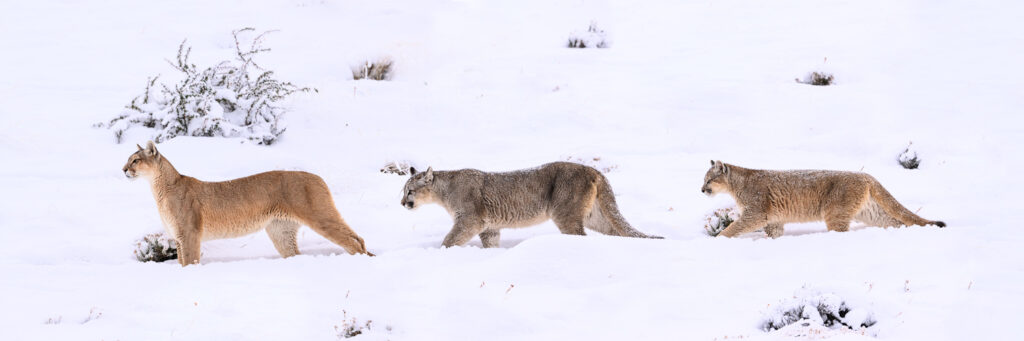
A puma walks with her cubs through fresh snow © Nick Garbutt

An Andean condor soars around the peaks © Nick Garbutt
Patagonia, at the southern tip of South America is imposing, windswept and beautiful. Here, the Andes juxtaposes with wide-open grasslands to epitomise the very notion of wilderness. Torres del Paine in southern Chile is a distinct rugged massif at the tip of the Andes and is often quoted as one of the most beautiful and majestic wild places on earth, especially in winter conditions, where breathtaking snow-capped mountains meld with stark glaciers, blue melt-water lakes and free-flowing rivers.

Male long-tailed meadowlark © Nick Garbutt
This area is a refuge for a wealth of wildlife and is a stronghold for the region's top predator, the puma. Torres del Paine is quite simply the best place in the world to see these magnificent cats, as well as a many other species.
This is a big cat experience like no other, because puma tracking is on foot, so you are watching and following the cats in their habitat on their terms. But don’t think views are only distant. Quite the contrary, you may get close, sometimes very close - views from 30m or closer are not uncommon. The excitement and exhilaration of such an eye-to-eye encounters, is beyond compare. And this of course yields potentially superb photographic opportunities.

A female puma with her two cubs © Nick Garbutt
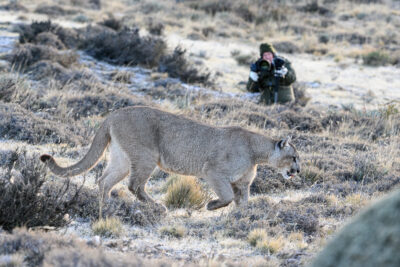
A client on a previous tour photographing a female puma © Nick Garbutt

Reflection in Lago Pehoe and dramatic light at sunrise © Nick Garbutt
This tour concentrates for a prolonged period, on the prime areas where seeing and photographing pumas is most likely. These areas are reminiscent of rolling moorlands and support large populations of guanacos, the pumas main prey. The cats are often encountered hunting, especially around dawn and dusk, but can be seen at any time. The populations in these areas are considerable, and while some individuals are shy and skittish, many are tolerant and approachable. We engage specialist local guides and puma trackers to maximise our chances of finding and photographing these sublime felines.
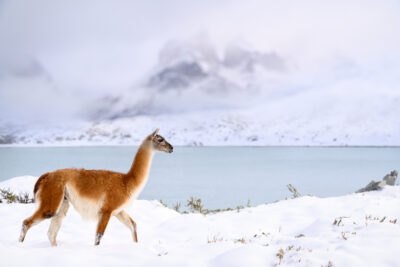
Guanacos are well adapted to cold winter conditions: here on the shores of Lago Pehoe © Nick Garbutt
Furthermore, the region also offers a chance of seeing and photographing other iconic species, like the Andean condor. We will visit a location where close encounters with these normally shy birds are highly likely and consequently the photographic possibilities are excellent too. In addition, we have plenty of opportunities to photograph other species like inquisitive guanacos, Patagonian grey foxes and possibly Patagonian hog-nosed skunk, that can be surprisingly relaxed and approachable. Other birds regularly seen include, austral pygmy owl, southern crested caracara, long-tailed meadowlark and austral parakeet.

The granitic peaks of Cuernos del Paine at sunrise © Nick Garbutt
Landscape photography opportunities also abound. The glowing light around dawn and dusk can be spectacular. This is also an area that is regularly very windy, which often results in the formation of numerous lenticular clouds that further augment these opportunities.
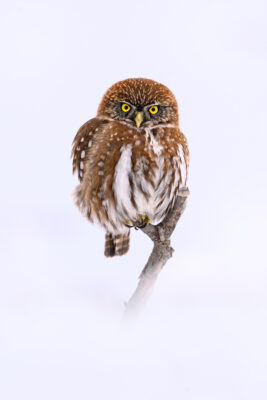
Austral pygmy owl © Nick Garbutt
Lago (Lake) Grey is another highlight, where icebergs lie stranded on the shores after a slow drift from the Grey Glacier. Despite its rather austere name, the glacier is one of the most beautiful and colourful in Patagonia. The front is deeply crevassed and the solid glacial ice varies in colour from whitish to deep indigo. The glacier is flanked towards the east by impressive granite walls that are part of the Paine Massif, and towards the west by the eroded and low summits of the older Andes.

A southern crested caracara perched near the shores of Lago Pehoe, with mist and the 'Horns' of Torres del Paine in the background © Nick Garbutt
Around the lake’s southern shores, are impressive stands of southern beech forest, where gnarled branches are festooned with luxuriant lichens. Here, birds like austral pygmy owl, Magellanic woodpecker and austral parakeet may be seen.
Torres del Paine is, without question, Patagonia's premier wildlife location and in combination with its unsurpassable scenic splendour and comfortable accommodation this makes for a perfect varied photography tour destination.
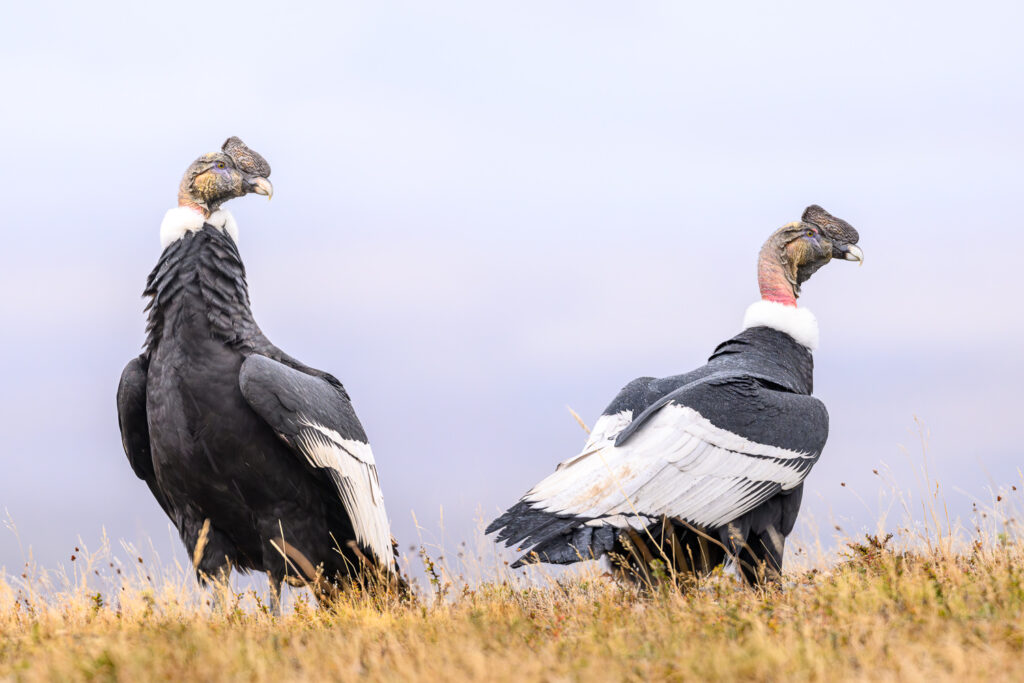
Male Andean condors gather close to a carcass © Nick Garbutt
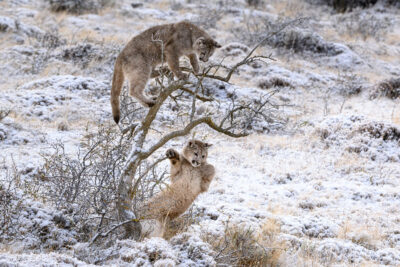
Puma cubs - around 5 to 6 months old - playing in snow © Nick Garbutt
Winter Conditions: It will likely be very cold with night time and early morning temperatures often falling below -10°C and sometimes even down to -20°C . Snowy conditions, however, are far from certain. When snow does fall, it often persists only for short periods, so getting the opportunity to photograph pumas and other wildlife in the snow requires a degree of good fortune. Although we spend the whole days in the field, there is always the option to return to a vehicle if conditions deteriorate and become too unpleasant.
Photography Equipment
For pumas and guanacos, mainly telephoto: a lens of at least 400mm e.g. 100-400mm or 100-500mm is recommended, but longer lenses, including prime lenses between 400mm and 600mm are also worthwhile. With some closer puma encounters shorter lenses, e.g. 70-200mm are useful, especially to show subject in the context of its environment. Short telephoto and wideangle lenses, e.g. 24-120mm for some landscapes and scenery. A tripod and waterproof camera / lens coverings is also advised.
Click: contact Wildlife Worldwide to book this tour
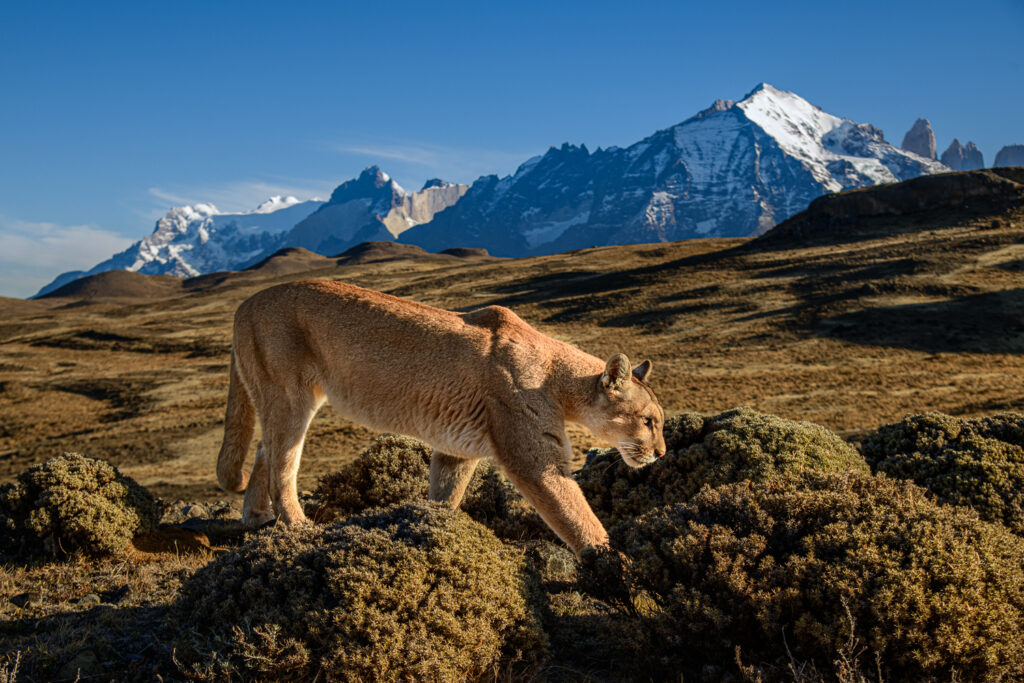
It is hard to overstate the dramatic beauty of the landscapes in Torres del Paine. However, even in the depths of winter, snowy conditions in the lowland areas, where the pumas live and hunt, are relatively infrequent. More often, the weather is clear, crisp and cold, with the sun low on the horizon and beautiful light persisting throughout much of the day © Nick Garbutt
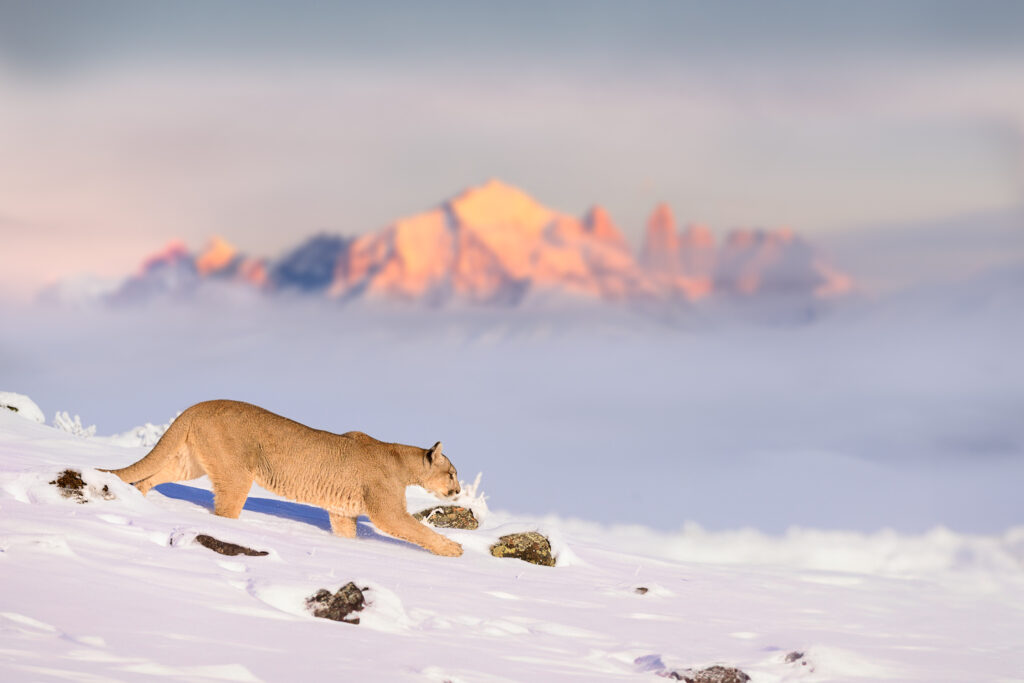
Shortly after sunrise, with the glow of the first rays catching the famous Towers, a puma walks along snow covered ridge top near Torres del Paine National Park © Nick Garbutt
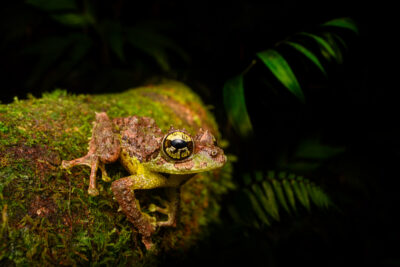
The mossy bush frog is a montane forest specialist, sometime found on night walks in Kinabalu Park © Nick Garbutt
Dates: 3rd - 24th September 2027
Price: £13,995 (Twin-share: Flights inclusive)
Price: £12,995 (Twin-share: Land Only)
Single Supplement: £1,195
Maximum Group 12
Current Availability: 4 places remain, please enquire
LEADERS: Alex Hyde, Nick Garbutt & Chien Lee
GRADING: Moderate. A variety of conditions from hot, humid lowland rainforest (Gunung Mulu), to cooler montane forests (Mt Kinabalu and Trus Madi). Walks are generally short to medium length (1-3km), but hills can be moderate to steep with uneven, sometimes slippery, under foot conditions in both lowland and montane forest areas. Days maybe long, with both early mornings and late evenings as there are night walk options in most locations.
Few places conjure more evocative images of mystery than Borneo. Its varied rain forests are amongst the oldest and most diverse on the planet and are home to some of the most charismatic and well-known ‘jungle’ species, like the fabled orang-utan, improbable proboscis monkey, pygmy elephant and several spectacular hornbills.
However, the often ‘unseen’ diversity of smaller species – insects, other invertebrates, frogs and reptiles – is, if anything, even more spectacular. This tour focuses on Borneo’s ‘Smaller Majority’ by visiting ‘off-the-beaten track’ locations, where these subjects take centre stage.

A lantern fly or lantern bug rests on tree trunk in low-elevation rainforest. Photos like this are taken with a very close focusing wide angle macro lens © Nick Garbutt
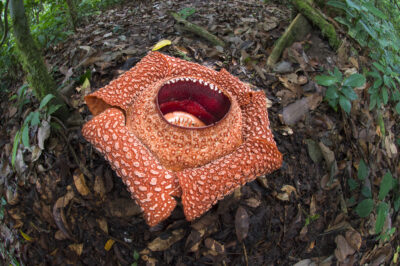
Rafflesia, the world’s largest flower, might be seen in Gunung Gading or Mount Kinabalu (this bloom is about 3 days old) © Nick Garbutt
From our first base in Kuching in Sarawak, we will visit Bako, Kubah and Gunung Gading National Parks, that offer considerable insect, arachnid and frog diversity, even during the day and this will encourage a variety of close-up techniques to be employed. There will also be the possibility to photograph pitcher plants (in Bako NP) and hopefully the magnificent Rafflesia, the world's largest flower (in Gunung Gading NP), although blooming is seasonally variable.
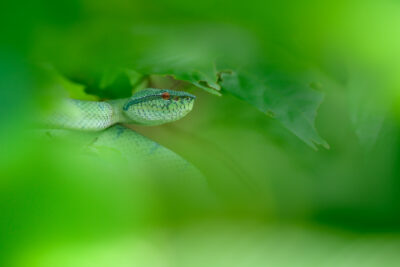
On both daytime and night walks we will hopefully encounter spectacular snakes like the Bornean keeled pit-viper © Nick Garbutt
After dark we will visit locations that are renowned for night walks and regularly provide a plethora of subjects, including spectacular beetles, spiders, frogs, snakes and other reptiles that are more active during darkness.
We next move onto the World Heritage Site Gunung Mulu National Park in northern Sarawak, famous for some of the largest caves in the world, as well as spectacular limestone pinnacle karst formations. The surrounding forests are home to a vast diversity of species that provide a wealth of subject matter for the visiting macro photographer. There are extensive boardwalk trail systems to access the forest and some of the caves and we will spend time exploring both these environments.
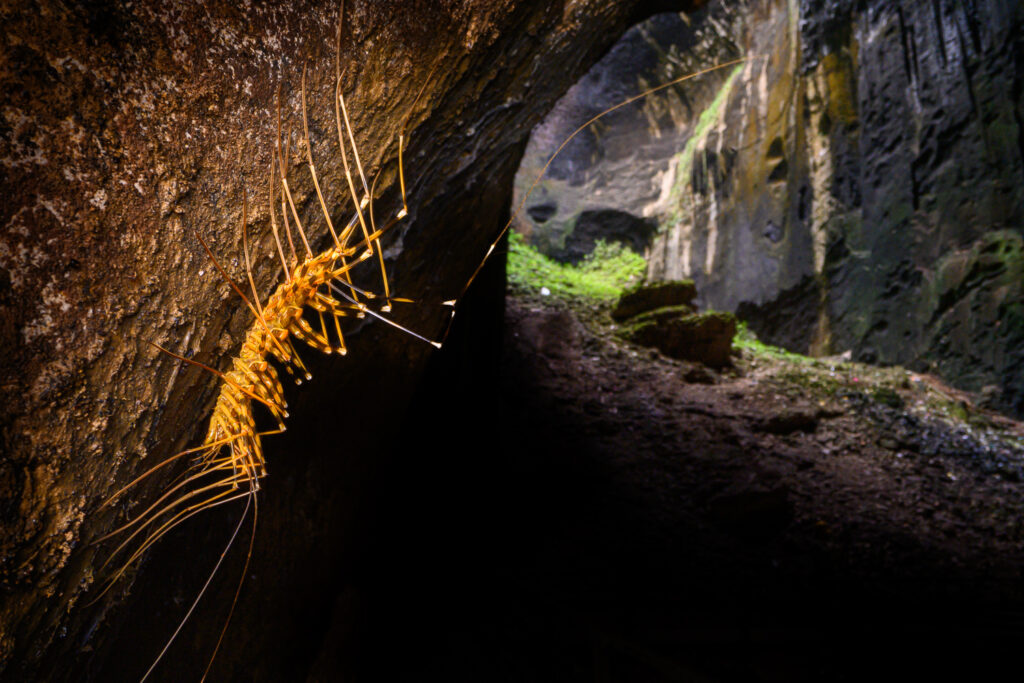
Borneo is famous for its extensive cave systems, none more spectacular than those at Gunung Mulu. Within these there are numerous cave-specialist species like the long-legged centipede or scutigerid © Nick Garbutt
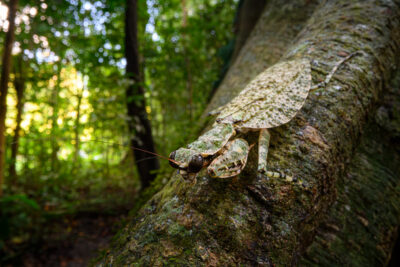
Camouflage is a feature of rainforest species. Here a tree bark mimic mantis rests on buttress root © Nick Garbutt
The forests are renowned for beetles, lantern bugs and a considerable variety of crickets and mantises as well as a spectacular array of fungi. At cave entrances and within the darker recesses we will have the opportunity to photograph some of the more unusual cave-dwelling invertebrates, that offer opportunities to delve into more creative lighting techniques. There will also be the chance to see the amazing bat exodus, where millions of bats pour out of the cave entrances at dusk.
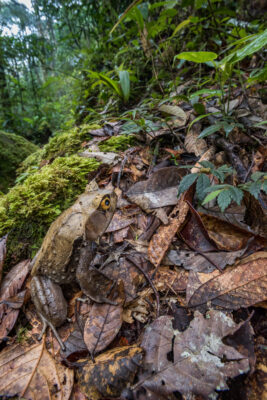
The mid-elevation slopes of Mt Kinabalu (around 1400m asl) are home to Kobayashi's or montane horned frog © Nick Garbutt
In contrast, in Sabah, we have selected two higher-elevation locations with cloud forests that are exceptional for insect diversity in particular. Rising like a citadel, Mt Kinabalu, the highest peak on Borneo, is a montane 'oasis' that supports a wealth of high elevation specialists. In these forests grow a profusion of pitcher plants and on lower slopes Rafflesia, in addition to many endemic invertebrates, frogs and reptiles.
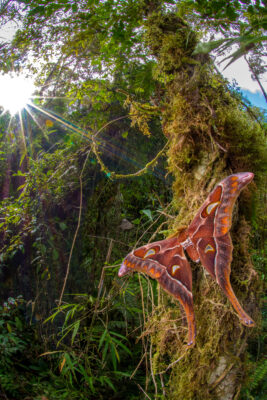
The cloud forest of Mount Trus Madi are renowned for their insect diversity, including spectacular Atlas moths © Nick Garbutt
Nearby lies Mount Trus Madi, the island’s second highest peak, which supports upland moss and lichen encrusted cloud forests that are a macro photographers paradise, with a wealth of unusual invertebrates, frogs and reptiles and are also a haven for pitcher plants. Night time photography here is especially rewarding with large numbers of beetles and moths, including numerous giant species, that regularly show themselves.
In combination the locations we visit offer a window into the natural splendour of Borneo in general and its myriads of smaller species in particular, offering endless inspiration for the macro photography enthusiast.

Spectacular bioluminescent fungi are a feature of several locations. Achieving results like this requires a considered approach and delicate technique © Nick Garbutt
Why a Workshop?
Tropical rain forests are the greatest expressions of life on the planet and serve up a wonderful array of species, but they are also amongst the most challenging places to take photos successfully. As such rain forest locations lend themselves ideally to workshop format tours, where fewer places are visited but more time is spent in the chosen locations than would otherwise be the case on a 'regular' tour.
For this dedicated macro workshop, hosted by two leaders with a wealth of rain forest and macro photography experience, extended stays in several of Borneo's premier macro locations (in both Sarawak and Sabah) have been chosen to maximise the photographic potential. In addition, the diversity of these sites offers the opportunity to introduce and teach numerous general photography and specialist macro and lighting techniques, such that participants gain as much insight as possible which hopefully helps move their photography onto the ‘next level’.

Macro subjects like this atlas three-horned rhinoceros beetle, often encountered on Trus Madi, are an important component of any rainforest workshop. Using close-focus wide angle lenses, like the Laowa 15mm macro or Laowa 24mm probe, allows such subjects to be shown ‘within the context of their environment’ that adds impact and a sense of place © Nick Garbutt
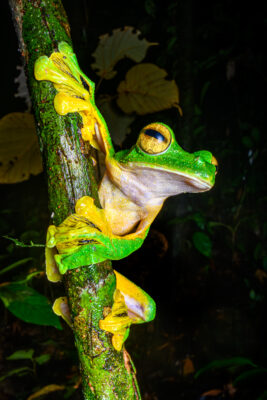
The iconic Wallace's flying frog is a prized find on night walks lowland forest locations © Nick Garbutt
Photography Equipment
Macro photography will clearly dominate, but a variety of equipment will nonetheless be useful. A short to medium telephoto macro offering 1:1 reproduction e.g. 105mm or 180mm will be key, together with appropriate flash, ideally with off-camera capability, and in conjunction with a diffuser or 'soft box'. In addition, close focus wide angle e.g. 14-24mm, 16-35mm, will cover the many ‘subject in environmental context’ opportunities, while a moderate telephoto zoom, e.g. 100-400mm will cover some situations with invertebrates, frogs and reptiles as well as opportunistic encounters with birds and mammals. Waterproof protection for camera gear is highly recommended. And a tripod is advisable.
Alex is arguably the UK's best macro photographer. At several rainforest locations we use lodge moth traps that attract a vast array of subjects © Nick Garbutt
Alex Hyde
I am delighted to be joined by good friend Alex Hyde on this trip. Alex is one of the UK's finest exponents of macro photography, combining the best of art and science into his exquisite images. He is a master of the technical aspects of digital photography and in the field or indoor workshop environment has the enviable skill of being able to convey challenging topics and ideas, concisely, simply and in a way that makes them understandable. To see more of Alex's stunning work click here
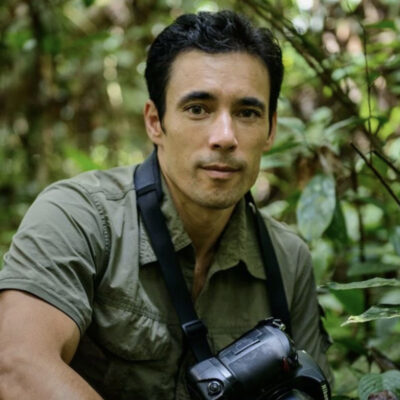
Chien Lee is one of the world’s foremost rainforest photographers
Chien Lee
Alex and I are thrilled to be joined by local specialist and internationally renowned photographer Chien Lee for this workshop. Chien has lived in Borneo since 1996 and is best known for his innovative photography of carnivorous plants and his exceptional camera trap images, especially of elusive rainforest carnivores.
He has a wealth of experience leading photography workshops across South East Asia and further afield. He has won multiple awards, including in the Wildlife Photographer of the Year Competition, where he has also served as a judge. With such levels of experience and expertise, Chien is the perfect addition to this specialist photography tour to Malaysian Borneo. Take a look at Chien's wonderful photography click here
Click: contact Wildlife Worldwide to book this tour
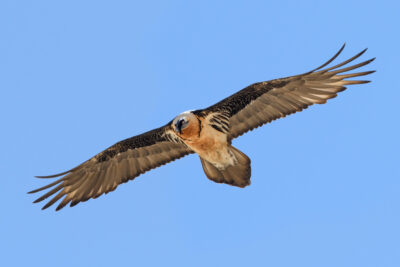
Adult lammergeier or bearded vulture soars on mountain thermals © Nick Garbutt
February 2028 (TBC)
Price: £TBC (Twin-share: Flights inclusive)
Price: £TBC (Twin-share: Land Only)
Single Supplement: please enquire
Maximum Group 8
Current Availability: provisional names being taken, please enquire
Click for further details
Read tour report 2017
Read tour report 2018
Read Panthera Blog 2019
GRADING: Moderate to Challenging. Most snow leopard sightings are from near the lodge, within the valley in which we stay or adjacent valleys. Access to most locations is by car: long walks are generally unnecessary, but optional at times. High altitude and its potential physiological effects and potential extreme cold are the main challenges. Our lodge lies at 3900m asl., and it is easy to become breathless, especially when walking up even slight inclines. There is access to oxygen for anyone who requires at all times (both in the lodge and when out). Daytime temperatures between 0˚C and - 5˚C, at night -10˚C to - 20˚C.
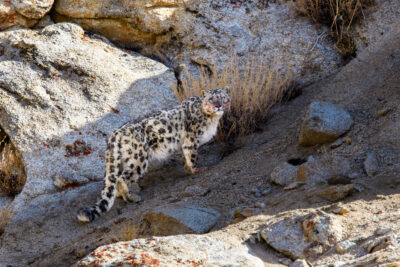
Highly sought after: a sighting of a wild snow leopard © Nick Garbutt
If ever an animal epitomised remote, rugged wilderness it is the snow leopard: for so long regarded as a mythical ghost of the mountains, a creature that lived unseen amongst the crags, crevices and shadows of the snow-capped peaks of the Himalayas and Central Asia.

Searching the slopes for a snow leopard © Nick Garbutt
No longer. Over the past decade significant conservation efforts to reduce snow leopard predation and their impact on domestic livestock, have changed the attitudes of local people towards the cats - where once they were reviled and persecuted, now they are revered and celebrated. Consequently, locations in the Himalayas have emerged that reveal regular and reliable snow leopard sightings and offer the opportunity to see what must be one of the most mysterious and beautiful animals on earth.
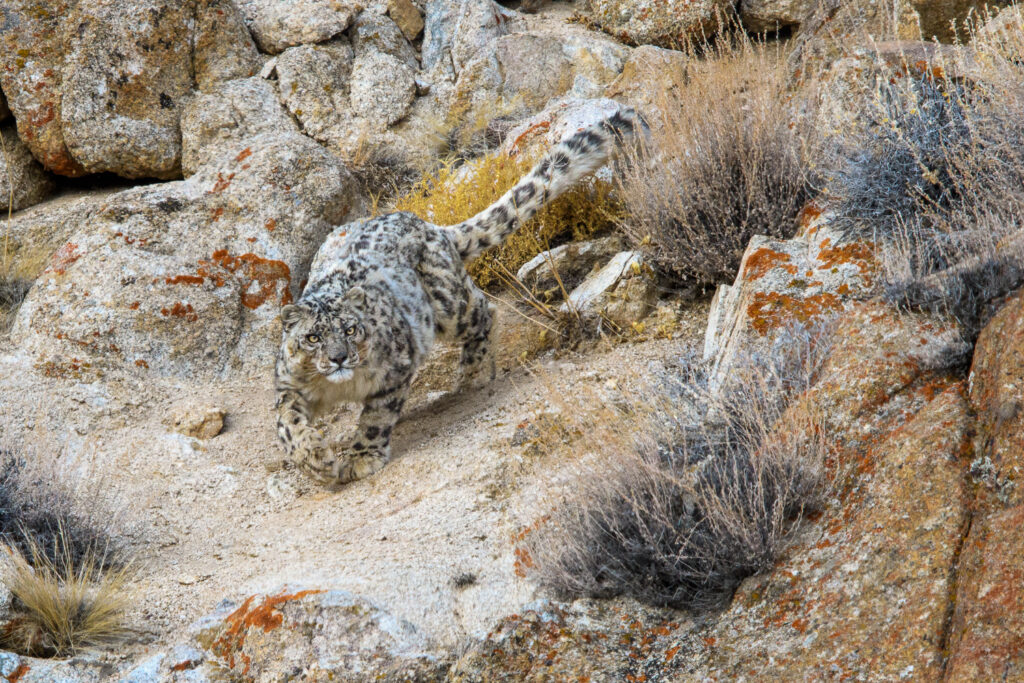
A female snow leopard blends beautifully into the rocky terrain © Nick Garbutt
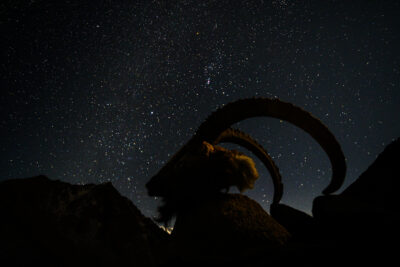
With virtually no light pollution, amazing starry night skies are a real feature. Here a large male ibex killed by a snow leopard is silhoueted © Nick Garbutt
We partner with an expert Ladakhi operator who work in conjunction with a local communities in remote regions. They have built on the concept of a ‘traditional homestay’ and subsequently developed it into more comfortable accommodation in some of the most remote and extreme locations.
Our two snow leopard bases lie in the Zanskar / Himalayan ranges, some two hours from Leh, where our primary focus is on four near-adjacent valleys, Manhyu, Ulley, Hemis Shukpachen and Saspoche, and the surrounding areas, that lie both to the north and south of the River Indus. These areas support a healthy population of snow leopards and other species.
We work closely with a team of local expert trackers, who each work in different valleys to maximise the chances of success. While the trackers search, we follow in comfortable vehicles, allowing us to move easily between locations, and therefore get as close as possible to potential sightings. Most encounters are seen from near the lodge or from roadsides in adjacent valleys, but it may be necessary to set out on foot at times to increase the chances of an improved sighting. Hence, the walking elements and requirements for this tour need not be as demanding as might be anticipated.
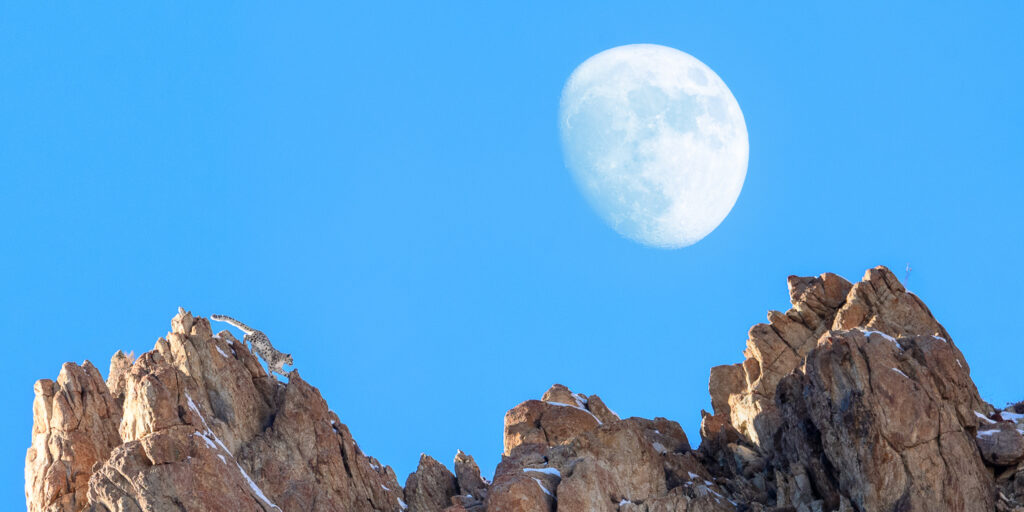
A female snow leopard moves along a high ridge © Nick Garbutt
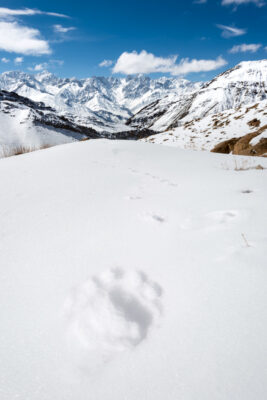
Fresh pug-marks of a snow leopard with the Zanskar ranges in the background © Nick Garbutt
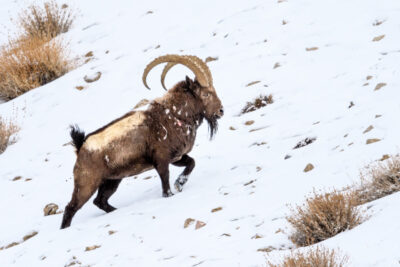
Siberian ibex are the main prey of snow leopards: this male has just escaped an attack, the scarring and wounds on flank are clearly visible © Nick Garbutt
While snow leopards are clearly the main focus in this area and looking for them occupies the majority of our time, there is other Himalayan wildlife to see and enjoy. The area is also excellent for Siberian ibex, urial or shapo (a type of wild sheep) - both the main prey species for snow leopards - wolf and red fox, as well as birds such as golden eagle, lammergeier, red-billed chough, Alpine chough, white-winged redstart, robin accentor and sometimes wallcreeper.

Frequently seen in the bushes along streams in the valley bottom, a white-winged redstart © Nick Garbutt
Our accommodation is a very comfortable low-impact lodge at 3,900m asl. Given the lodge’s remoteness and extreme location, the level of comfort far exceeds expectation. All bedrooms are en-suite and heated by electric radiators. Bathrooms have constant hot water, showers and western-style toilets.
Prior to our ten nights in the snow leopard areas, we have three full days to acclimatise to altitude in the Leh area beforehand (around 3400m). This will include a day trip along the Indus Valley to areas where the Himalayas first began to form. This will offer a first taste of mountain wildlife where species like blue sheep or bharal, golden eagle, lammergeier, ibisbill, hill pigeon, chukar partridge and even occasionally Eurasian lynx are seen.
This tour visits spectacularly remote, rugged, and harsh regions that offer an opportunity to see and potentially photograph one of the world’s most beautiful and challenging to see cats, while staying in comfort and without the need to trek over large distances, making the experience more accessible than the majority of alternatives.
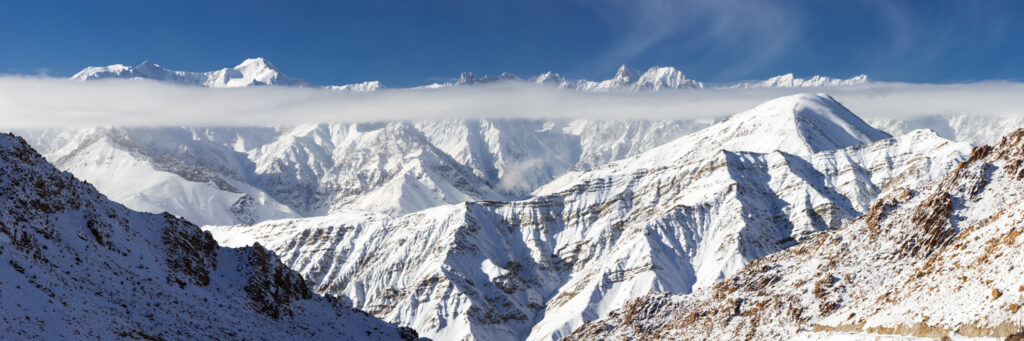
The snow covered Himalayan peaks provide a breathtaking backdrop. This is the view down the valley where we stay © Nick Garbutt

A group of urial or shapu, one of the species of wild sheep of the region, and another prey species for snow leopards © Nick Garbutt

Much sought-after by keen birders, a male wallcreeper in breeding plumage © Nick Garbutt

Our lodge provides very comfortable accommodation in an extreme location: heated rooms with comfortable beds, flushing loos and hot showers! © Nick Garbutt
A Note on the Photography
The principle goal of this tour is to see snow leopards and the chance of success are very good indeed. However, it should be noted that getting meaningful images is more challenging. Most sightings of cats are at some distance (500m+), so photos tend to be of snow leopards very small in the frame: what you might term ‘record’ or ‘within the environment' shots. However, from time to time, closer encounters do occur (100m-400m) and it is possible to get something more meaningful where the cat fills a more significant area of the image. Obviously having a long telephoto lens is key.
Photography Equipment
As an absolute minimum a lens of 500mm is required and ideally a lens of 600-800mm. A good alternative is to use a telescope and attach a camera or even mobile phone. For landscape and scenery shots, lenses like 70-200mm or 24-120mm are idea. A tripod is advisable. There are excellent opportunities for dramatic time-lapse sequences and the night sky photography can be spectacular.
Click: contact Wildlife Worldwide to book this tour

Can you see it? A male snow leopard stretches after resting in a rocky outcrop in the Ulley Valley © Nick Garbutt

The road journey to our lodge is breath-taking in every sense © Nick Garbutt

A male red fox close to our lodge © Nick Garbutt
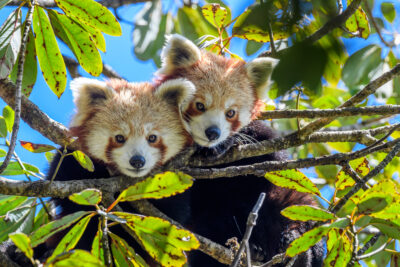
Uber cute! A pair of young red pandas © Nick Garbutt
Dates: TBC: March 2028
Price: £TBC (Twin-share: Flights inclusive)
Price: £TBC (Twin-share: Land Only)
Maximum Group 8
Current Availability: Please enquire
Contact Wildlife Worldwide to enquire about this tour
GRADING: Easy to Moderately Difficult. While sometimes red pandas can been seen easily from accessible forest tracks, at other times it may be necessary to trek through dense undergrowth on steep slopes. The altitude (above 2000m) can exacerbate feelings of breathlessness. All safaris and wildlife watching in Central Indian tiger reserves is from vehicles. There is no walking other than around the lodges. Early mornings can be very cold, requiring several layers and hats and gloves.
Nowhere is quite like India. Through its sights, sounds and smells, the subcontinent serves up a continuous and compelling assault on the senses, while its wild places support a wealth of charismatic species.
If ever an animal epitomised the notions of ‘cute’, ‘adorable’ and ‘endearing’ it must surely be the red panda? Accessible locations offering reliable opportunities for seeing these delightful mammals in the wild have, until recently, been scarce.
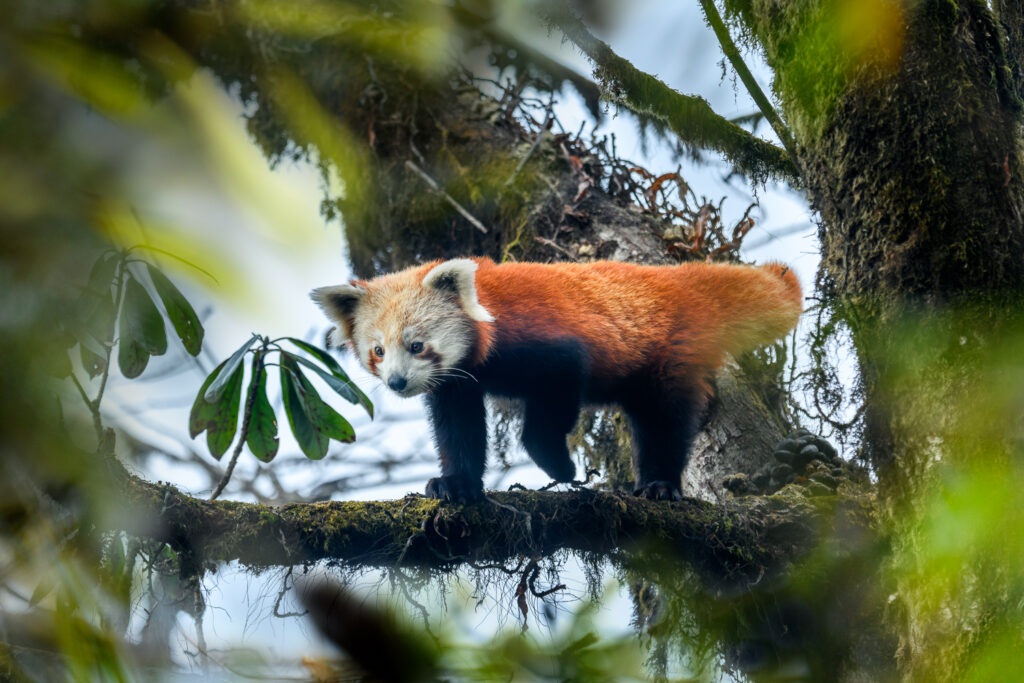
Although they sleep for prolonged periods, with patience there is a good chance to see red pandas active in the forest canopy © Nick Garbutt
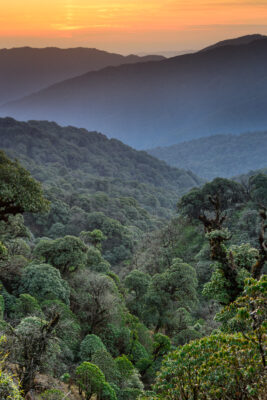
The temperate broad-leaf forest cloaking the sleep slopes of Singalila provides a home for a wealth of unusual species © Nick Garbutt
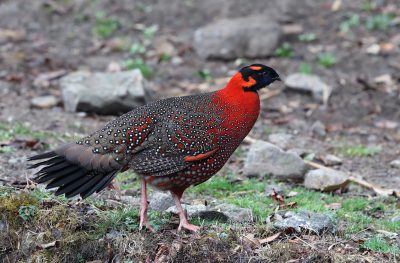
Singalila provides ideal habitat for the stunning satyr tragopan or crimson horned pheasant ©Tom Kogut Photography
One reason is that their limited range in the foothills of the Eastern Himalayas, through to southwest China has been difficult and time consuming to access. They inhabit dense temperate montane broadleaf forests, where bamboo – the core constituent of their diet - flourishes.
Singalila National Park lies on the border of India and Nepal and incorporates a ridge at elevations above 2150m (7000ft) and up to 3600m (11,800ft) that is dominated by temperate broad-leaf forests, with bamboo, oak and rhododendron species to the fore. This is ideal red panda habitat and in recent years the park has become an increasingly reliable location for seeing the ‘forgotten panda’.
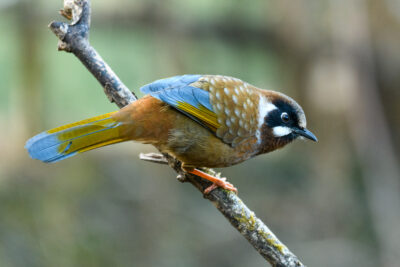
The black-faced laughingthrush is often seen close to the lodge © Nick Garbutt
The park is also home to a wonderful array of birds, including many rare and normally difficult-to-see species that are restricted to the Himalayan foothills and forest habitats. These include several species of laughing thrush, yellow-billed blue magpie, the spectacular satyr tragopan, kalij pheasant and brown and fulvous parrotbills.
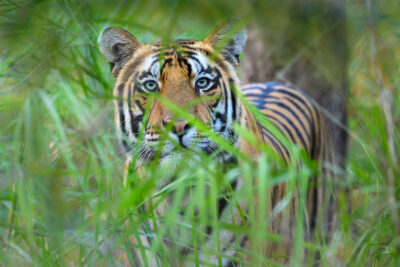
The uncompromising stare of a tiger! © Nick Garbutt
All wildlife watching and photography in Singalila is on foot, with prime red panda areas accessible during walks of varying length. In places the slopes may be steep and the terrain difficult. Clearly the pandas will be our primary focus, but the birdlife of the area as well as the beautiful forest itself, is sure to also provide plenty of photographic inspiration.
Elsewhere on the subcontinent, few places are more evocative or magical than the ancient forests of Central India. When shrouded in early morning mists, shafts of light spear through the canopy to create a glorious palette of golds, ochres, oranges and greens. Then the alarm calls of monkeys, deer and peacocks shatter the silence as a tiger takes its first steps of the day. The atmosphere is spine-tingling, and super-charged with anticipation and excitement. No other animal sets the pulse racing quite like a tiger; even the tiniest inkling that there may be one close by - concealed, lurking and silent - sets the nerve-ends jangling.
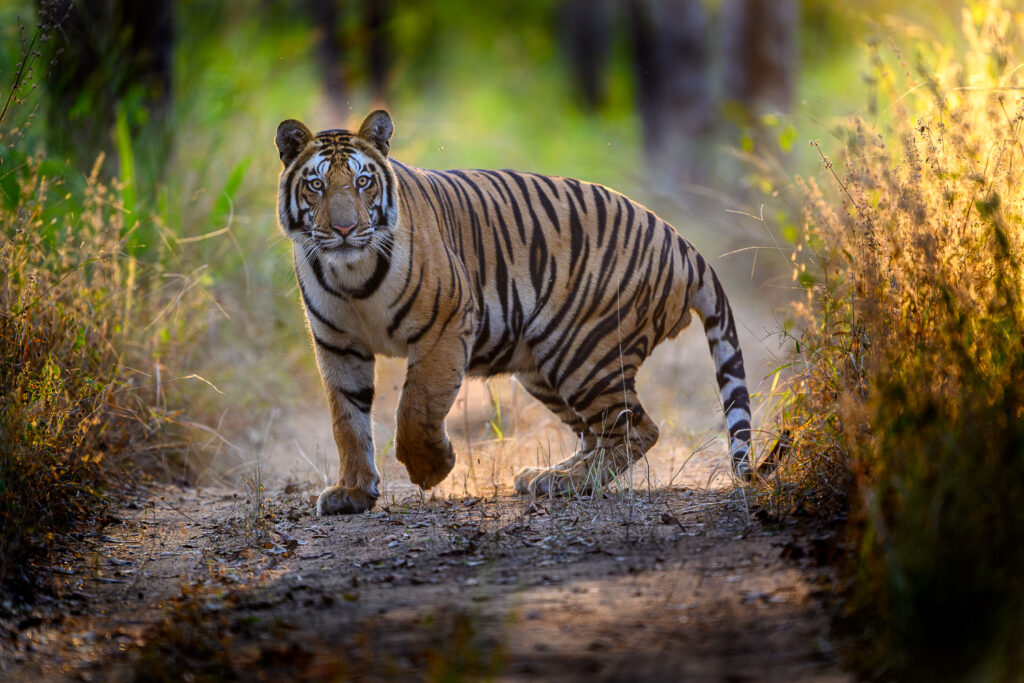
Alert with curiosity, a young male tiger strikes a pose in glorious late afternoon light © Nick Garbutt
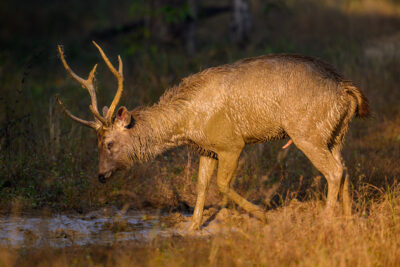
A male sambar in a mud wallow © Nick Garbutt
While some of India's famous tiger reserves have become overcrowded and unrewarding in the wildlife experience they offer, other reserves remain where tigers are visible, and the experiences on offer are memorable for all the right reasons. This tour will visit two of these reserves, where tiger sightings are generally reliable and there is also the potential to see and photograph a much broader diversity, including, leopard, sloth bear, Indian wild dog (dhole), and of course a variety of ungulates like chital (spotted deer), sambar, barasingha (swamp deer), Indian muntjac (barking deer) and wild boar.
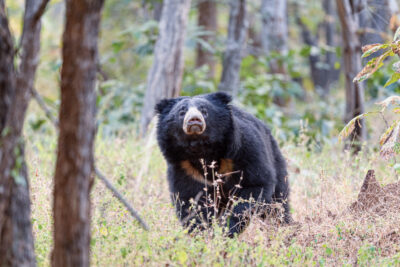
Sloth bears can be elusive but in both Central Indian reserves we visit, the chances of seeing them are good © Nick Garbutt
In both parks we will stay in very comfortable lodges that ideally situated to allow us to access the reserves and surrounding area for the best photographic opportunities.
By concentrating on two very different regions, this tour offers an opportunity to see and photograph a considerable diversity including two subcontinent’s most beautiful and iconic species – red panda and tiger - as well as a broad spectrum of India’s other fabulous wildlife. It also affords the opportunity to experience India in a way that avoids the crowds as much as possible and providing an enthralling and evocative wildlife experience that will linger long in the memory.
Click: contact Wildlife Worldwide to book this tour
With thanks to Tom Kogut Photography for the use of his photo.
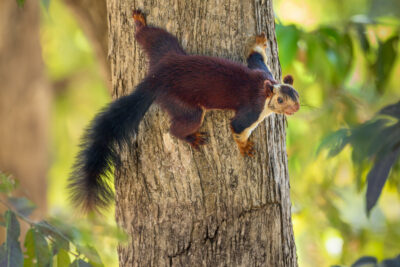
The spectacular Malabar giant squirrel can be seen in some Central Indian forests © Nick Garbutt
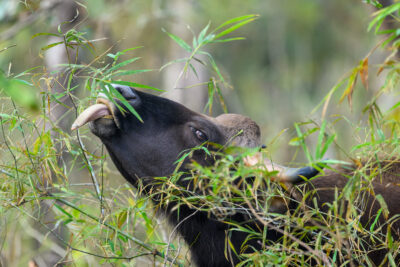
Central Indian forests are home to the largest of all wild cattle species, the gaur or Indian Bison. Here a female is browsing on bamboo © Nick Garbutt
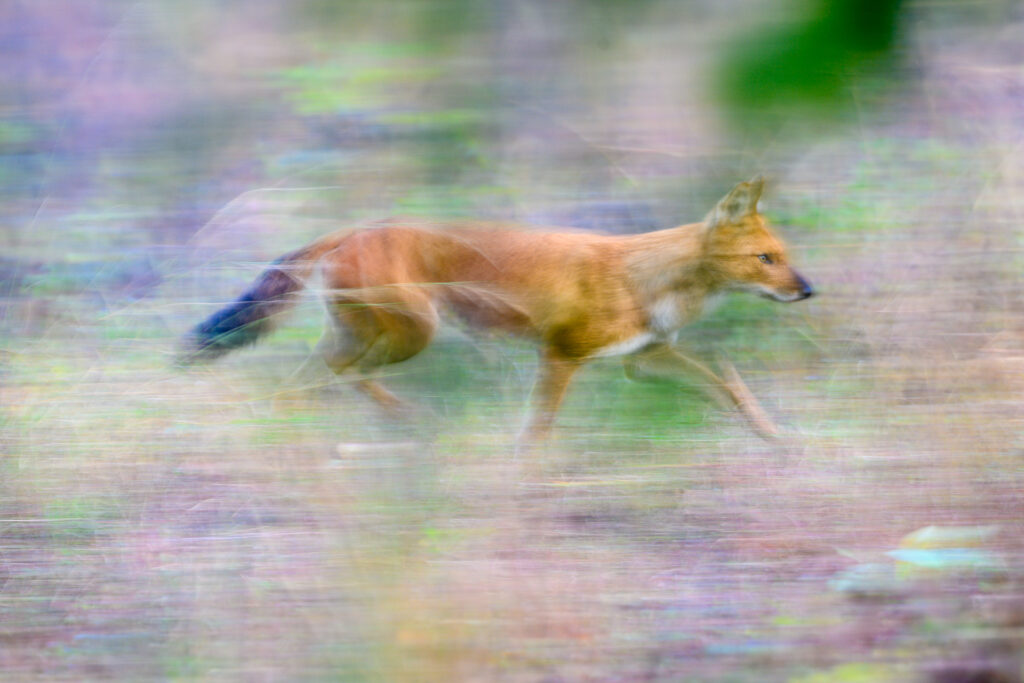
An Indian wild dog or dhole in Hindi trots through a meadow © Nick Garbutt
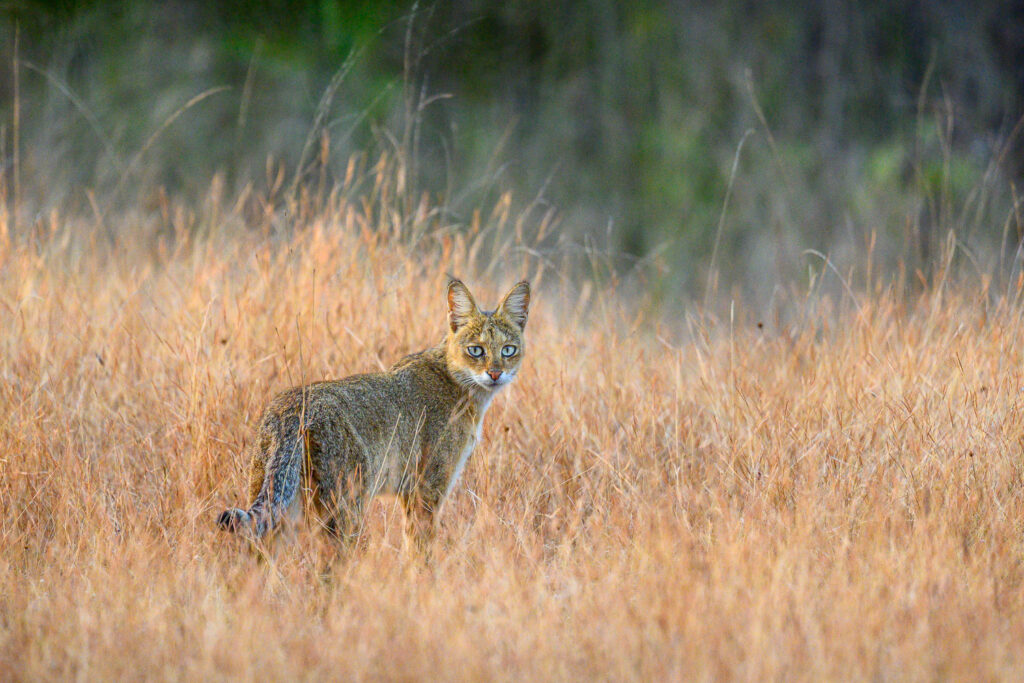
A jungle cat or jangli billi in Hindi hunting in an open meadow © Nick Garbutt

A caracal with its hard-earned meal, a Cape hare, in the Ngorongoro Crater © Nick Garbutt
Dates: TBC: August 2028
Price: £TBC (Twin-share: Flights inclusive)
Price: £TBC (Twin-share: Land Only)
Single Supplement: Please Enquire
Maximum Group 8
Current Availability: provisional names being taken, please enquire
Click for further details
GRADING: Easy. Entirely vehicle-based. The only walking is around lodges and camps. Early mornings, approx. 5.30am starts. Mostly separate morning and afternoon drives, but occasionally some long days, 12+ hours in the field.
The annual migration of wildebeest, zebra and other ungulates around the Serengeti-Masai Mara ecosystem often captures the ‘wildlife headlines’ and provides the main focus for so safaris to northern Tanzania. However, there are other ways to enjoy the magnificence of the Serengeti and its spectacular wildlife and while keeping away from the crowds. Between July and October rains fall in the northern Serengeti and across the border in Kenya's Masai Mara drawing in the herds from afar and enticing masses of visitors too. At the same time, there are vast areas in other part of the Serengeti, where all the resident wildlife continues with the day-to-day rhythms of life and all the trials and tribulations that come with it. Far fewer people are there to bear witness.

A pair of male lions with a dramatic storm building behind, Ngorongoro Crater © Nick Garbutt

Often challenging to locate, here one male and two female, greater painted snipe by a small pool in the Ngorongoro Crater © Nick Garbutt
This new tour concentrates on these ‘quiet corners of the Serengeti’, areas that attract considerable interest at other times, but are often largely ignored at this time of year.

Family groups of banded mongooses are often encountered in bushland areas in the Serengeti © Nick Garbutt
We begin in the Ngorongoro Crater: no trip to northern Tanzania would be complete without visiting this natural wonder. It is East Africa in microcosm: an exceptional place where tolerant and varied wildlife can be viewed in close proximity. The Crater is one of the best location to see majestic bull elephants, many still sporting impressive tusks and also black rhino (although they are more challenging to find in the dry season). There are several prides of lions and their constantly changing dynamic often means there is a chance of seeing interesting behaviour and interaction. The early morning and late afternoon light in the Crater is often dramatic, with the awe-inspiring backdrop creating scenes of compelling grandeur.

A female cheetah with three cubs begins an early morning hunt near Ndutu © Nick Garbutt

A female leopard climbing down from an Acacia tree in the Serengeti © Nick Garbutt

A male Grant’s gazelle at sunrise on the plains near Ndutu © Nick Garbutt
This serval was encountered hunting in a marsh in the Serengeti © Nick Garbutt
We then move onto the Ndutu area at the boundary of the Serengeti National Park and Ngorongoro Conservation Area, that is one of the finest photographic locations in East Africa, not only because of the diverse and abundant wildlife but also because of the capability to drive off-road and manoeuvre into optimal positions. Here the vast open plains are broken by extensive areas of acacia woodland with lakes and marshes that are always home to prides of lions, cheetahs and leopards. From January to April, when the rains fall and the grazing is lush, vast herds gather here to give birth (Great Migration tour) but from July to September the region is parched dry and the herds have migrated north. Nonetheless, there remains plenty to see as this area always offers excellent wildlife viewing and photography. Not only are the three ‘big cats’ resident, but also there is a good chance of seeing the three ’small cats’ too - serval, caracal and African wild cat. Resident grazing animals include kongoni (Coke’s hartebeest), impala, steenbok, bohor reedbuck, both Thompson’s and Grant’s gazelles as well as giraffes and elephants that pass through.

Hildebrandt’s starling is relatively common in most locations © Nick Garbutt

A woodland kingfisher © Nick Garbutt
The bird life is also exceptional at this time of year. The acacia woodlands are good places to look for various species of forest kingfisher like striped, woodland, and grey-headed kingfisher. There are also various bee-eaters, barbets and hornbills and numerous colourful passerines including numerous sunbirds, batis, superb and Hildebrandt’s starling, purple grenadier and green-winged pytilia to name but a few. At the woodland edge and on the open plains, a variety of raptors are likely to be seen, including black-chested snake-eagle, eastern and dark chanting goshawks, greater kestrel, red-necked falcon and tawny, Wahlberg’s, martial and long-crested eagles.

Rocky outcrops are ideal locations to look for leopards in the central Serengeti © Nick Garbutt
Our final location is in a remote corner of the western Serengeti, where our seasonal mobile camp nestles amongst woodland adjacent to the Nyaroboru Hills and the Musabi Plains and within striking distance of the Moru Hills and famous Moru Kopjes. This is an area well-away from most other camps or lodges and offers the likelihood of seclusion with plentiful wildlife. The area has healthy populations of carnivores, especially lions and leopards, the latter often being encountered amongst the many rocky outcrops in the area.

A kongoni or Coke’s hartebeest with her very young calf © Nick Garbutt
There is also a reasonable chance of seeing one or more of the black rhino that are resident in this area and are constantly protected by guards. Other species we are likely to encounter include topi, waterbuck and buffalo, as well as elephants, impala and giraffe. This is another excellent area for birding, with species preferring more dense woodland, like magpie shrike, Klaas’s cuckoo, white-crested helmet shrike and grey-headed bush shrike, often seen.
In combination these three locations offer a diverse cross-section of Tanzania safari experiences, with the final two locations likely to be quiet and away from the crowds. Given the variety of habitats we will experience, the range of mammal and bird species likely to be seen is impressive and includes not only the charismatic and iconic species we all associate with Africa, but also a large number of less-known, but equally interesting and impressive species. Throughout the tour the photographic possibilities will be many and varied.

A bachelor herd of bull elephants graze at first light in the Ngorongoro Crater © Nick Garbutt

Amazing pre-sunrise dawn light in the African bush © Nick Garbutt
The striking black-chested snake eagle © Nick Garbutt
Photography on Tour
This itinerary involves stays at three very different locations, the Ngorongoro Crater, Ndutu in the southern Serengeti and Moru in the central Serengeti with habitats varying from open plains, to open woodland, more dense woodland and hills with rocky outcrops. Photography will be equally varied, with opportunities to cover a large number of mammal and bird species likely. While in the Ngorongoro Crater and central Serengeti we will be exploring the many tracks that encompass all the major locations, while at Ndutu (which is in the NCA) we have the capability to drive freely off-road and explore the vast areas of the open plains.

The flap-necked chameleon can be found in bushes around lodges and camps © Nick Garbutt
As is always the case of African safaris, we will be out before first light in the morning and back after sunset in the evenings, with breaks back at our lodge / camp during the middle or the day. The vast majority of photography will be from our vehicles, but there are also likely to be opportunities around the lodges and camps to photograph birds and perhaps other smaller species like chameleons.
Photography Equipment
Mainly telephoto: a zoom e.g. 100-400mm, 100-500mm or 180-600mm will serve for many situations, but longer prime lenses 500, 600mm or even 800mm can come into their own, especially for birds. A shorter telephoto / wideangle lenses e.g. 70-200mm and / or 24-120mm are good for animals in context and wider landscapes. Bean bags are useful when in vehicles, while a small tripod could be useful for photography around our lodges and camps.
Click: contact Wildlife Worldwide to book this tour

A cluster of little bee-eaters in the Serengeti © Nick Garbutt

Macro enthusiasts will enjoy the challenge of photographing leaf-mimic bush crickets or katydids © Nick Garbutt
Dates: TBC: September 2028
Price: £TBC (Twin-share: Flights inclusive)
Price: £TBC (Twin-share: Land Only)
Single Supplement: £TBC
Maximum Group 12
Current Availability: provisional names being taken, please enquire
LEADERS: Nick Garbutt & Alex Hyde
Click for further details
GRADING: Moderate. A variety of conditions from humid lowland rainforest, to higher elevation cooler cloud forests. Walks generally short, but sometimes medium length (1-2km). Mostly flat, but some hills can be moderate to steep with uneven under foot conditions (cloud forest areas). Early morning and late evenings as there are night walk options.

The montane forests of Savegre are home to the emerald toucanet © Nick Garbutt
One of the world's most beautiful birds: a male resplendent quetzal in the forest understorey © Nick Garbutt
Costa Rica has long been regarded as a Central American jewel, renowned for its remarkable biodiversity and extensive protected forest areas. The incredible array of wildlife results from its position connecting North and South America and its topography, as a central spine of mountains creates different habitats and forest types on the Pacific and Caribbean slopes.
On previous workshops we have included locations on both slopes, attempting to gain a full appreciation of the country’s incredible biodiversity. Whilst these have been successful, it’s meant a certain degree of compromise, as climatic variations dictate there is no time of the year when conditions are simultaneously ideal on both slopes.
Hence, we are now offering separate workshops, targeting prime locations on each slope at ideal times (the Caribbean slope workshop is scheduled for May 2026).
On this workshop we visit locations on the Pacific slope, beginning in the high montage forests of the Savegre Valley. This is a renowned location for the resplendent quetzal, arguably Costa Rica’s most iconic bird, as well as other species like emerald toucanet and various hummingbirds. These upland forests are festooned with mosses and lichens and are also ideal places to search for interesting macro subjects like leaf mimic mantises and bush crickets (katydids).

The lowlands of Golfo Dulce and the Osa Peninsula are excellent places to look for red-eyed tree frogs © Nick Garbutt

High in the canopy on the Osa Peninsula rests a mantled howler monkey © Nick Garbutt
Leaving the cool of the highlands our next location is the lowland rainforest of the Golfo Dulce region. Our lodge has a sizable area of private forest bordering the Piedras Blancas National Park and is particularly rich in bird life, but also supports excellent populations of mammals including primates, coatis and tayra, together with amphibians including red-eyed tree frogs and glass frogs, and reptiles like iguanas and basaliks. Macro enthusiasts will also enjoy the opportunities to photograph a large variety of spectacular invertebrates, including leaf-cutter ants.

A fer-de-lance lies concealed in leaf litter on the rainforest floor © Nick Garbutt
Our final location is the Osa Peninsula, situated in the far south on the Pacific coast. Our lodge overlooks the ocean and the extensive private rainforest areas harbor a fabulous diversity of wildlife: capuchins, spider, howler and squirrel monkeys are generally seen, while coatis and agoutis live in and around the gardens. There are plenty of frogs (including poison dart frogs and red-eyed tree frogs), reptiles and invertebrates to find and photograph. The forest reserve also harbour pumas, ocelots and even jaguars that are captured on camera-traps and seen very occasionally.

A female tropical shield mantis waiting in ambush © Nick Garbutt
The bird life is diverse: yellow-throated toucans and fiery-billed aracaris are generally seen, while scarlet macaws visit on a daily basis and can provide excellent photography opportunities as they fly, often at near eye level, between roosting and feeding areas.
Costa Rica is without question a fabulous wildlife destination. The combination of wonderful biodiversity, accessibility and good quality accommodation means it warrants a tour that offers both a breadth of experiences and extensive lengths of stay in each location to make the most of the excellent photographic possibilities.

A female white-nosed coati and young, Osa Peninsula © Nick Garbutt
Why a Workshop?
Tropical rain forests are the greatest expressions of life on the planet and serve up a wonderful array of species, but they are also amongst the most challenging places to take photos successfully. As such rain forest locations lend themselves ideally to workshop format tours, where fewer places are visited but more time is spent in the chosen locations than would otherwise be the case on a 'regular' tour.
For this workshop, hosted by two leaders with a wealth of rain forest and macro photography experience, extended stays in several of Costa Rica's prime locations have been chosen to maximise the photographic potential. In addition, the diversity of these sites offers the opportunity to introduce and teach numerous general photography and specialist macro and lighting techniques, such that participants gain as much insight as possible which hopefully helps move their photography onto the ‘next level’.
Photography Equipment
As with most rainforest trips, a variety of focal length lenses are useful, from close focusing wide angle e.g. 14-24mm or 16-35mm, to short-tele macro e.g. 105mm, to longer telephotos, e.g. telephoto zoom 100-400mm. These will cover most situations with invertebrates, frogs, reptiles and some mammals and birds. Flash equipment very useful, especially with off-camera capability and in conjunction with a diffuser or ‘soft box’. A longer telephoto e.g. 500mm or 600mm is better for birds and mammals. Waterproof protection for camera gear is highly recommended. And a tripod is advisable.
Alex Hyde is undoubtedly one of the UK's leading macro photographers © Nick Garbutt
Alex Hyde
I am delighted to be joined by good friend Alex Hyde on this trip. Alex is one of the UK's finest exponents of macro photography, combining the best of art and science into his exquisite images. He is a master of the technical aspects of digital photography and in the field or indoor workshop environment has the enviable skill of being able to convey challenging topics and ideas, concisely, simply and in a way that makes them understandable. To see more of Alex's stunning work click here
Click: contact Wildlife Worldwide to book this tour
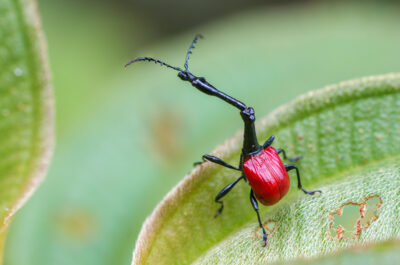
Male giraffe-necked weevel on leaves of favourite food plant © Nick Garbutt
Dates: TBC
Price: £TBC (Twin-share: Flights inclusive)
Price: £TBC (Twin-share: Land Only)
Single Supplement: £TBC
Maximum Group 8
Current Availability: Please enquire
Click for further details
Read an account of the 2014 trip
GRADING: Moderate, sometimes more Challenging. A variety of conditions from hot (over 35˚C), dry forest (north and west), to cooler mid-elevation rainforests (east). More remote locations are basic. All wildlife watching on foot. Walks are generally short to medium length (1-3km), but occasionally longer and inclines can be steep with uneven footing, especially in rainforest regions. Both early morning and late evenings as there are night walk options. Lots of internal travel by road and air. Roads often very poor.
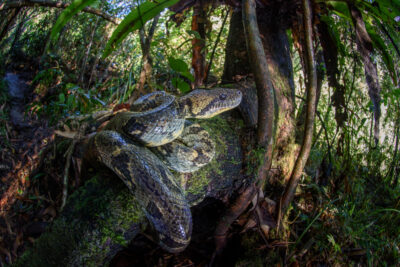
A Madagascar tree boa lies in ambush © Nick Garbutt
Madagascar is a island country like no other. Millions of years of isolation have led to the evolution of an array species found nowhere else on earth (some are so bizarre as to appear almost 'extraterrestrial'). Add to this an extraordinary range of habitats and the result is a destination brimming with, allure, intrigue and excitement.

The black-and-white ruffed lemur of often heard, but more difficult to see in Maromizaha Forest © Nick Garbutt
The island's most famous inhabitants are its lemurs - charming and highly varied off-shoots of the primate family tree, whose ancestors probably arrived on the island over 50 million years ago, and have subsequently diversified spectacularly - today over 100 lemur species are known. Amongst the most endearing are the cuddly teddy-bear like indri and gorgeous diademed sifaka live in the lush eastern rain forests, while white Verreaux's sifakas bound through the dry forests of the west and south. Then after dark the island's 'Spirits of the Night' become active: miniscule mouse and dwarf lemurs scurry along branches, while hedgehog-like tenrecs bumble in the undergrowth. Strangest of all is the aye-aye, a primate that looks like a cartoon 'witches cat', with bat-like ears and buck teeth and is certainly one of the world's most peculiar mammals.
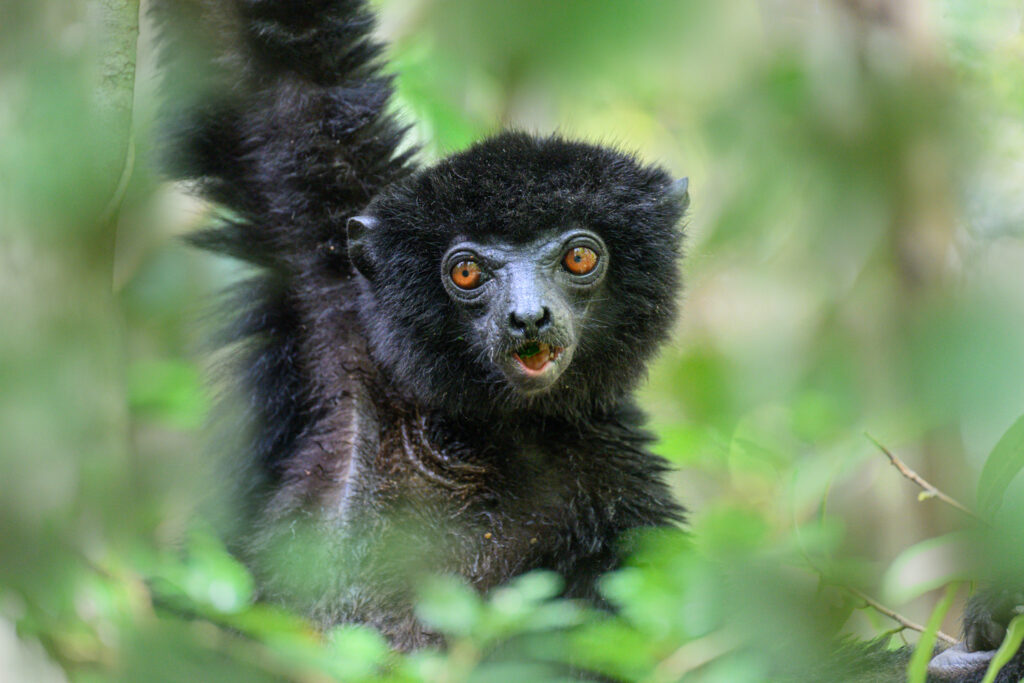
Perrier's black sifaka is one of the world's rarest primates and is restricted to a tiny enclave of humid dry forest in the far north © Nick Garbutt
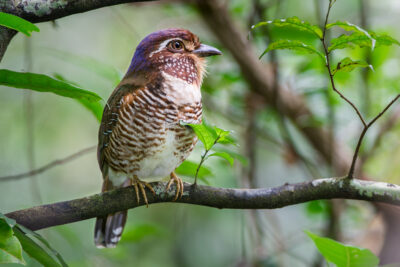
The endemic short-legged ground roller is one of numerous species keenly sought after by keen birdwatchers © Nick Garbutt
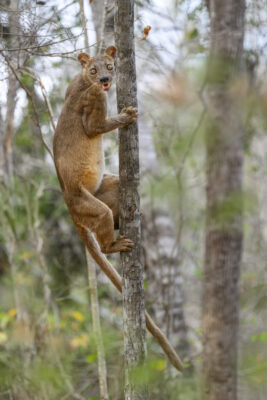
The fosa, is a skilled and agile climber, as this female in western dry forest clearly illustrates © Nick Garbutt
There are numerous birds unique to the island (over 65% are endemic), varied vangas with many beak shaped, noisy couas and colourful, skulking ground rollers. Reptiles too abound - over 60% of the world's chameleons live nowhere else, including the world's largest and smallest species, and amazing leaf-tailed geckos have near-perfect camouflage. Add to this a myriad of colourful and very vocal tree frogs and multitude of peculiar insects like the amazing giraffe-necked weevil and there is always something to grab your attention.
This trip will visit some of the island's prime sites like the rainforests of Andasibe-Mantadia, home of the indri and diademed sifaka, and the western deciduous forests of Kirindy, where the fosa, Madagascar's largest carnivore might be seen, as well as Verreaux's sifaka and at night Madame Berthe's mouse lemur, the world's smallest primate.
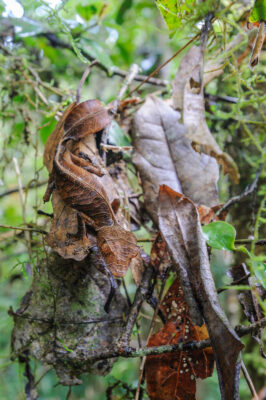
The remarkably camouflaged satanic leaf-tailed gecko © Nick Garbutt
We combine these sites with less well-known and far less frequently visited locations like Analamerana and Daraina, which are equally spectacular and offer the chance to see some unusual species and regularly conjure up surprises.
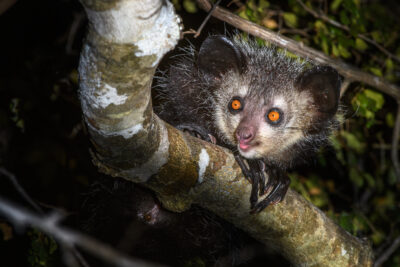
The aye-aye is perhaps the world's most peculiar primate and can sometimes be seen in Daraina © Nick Garbutt
At Daraina in the far north, fragments of remaining humid forest support the beautiful golden-crowned sifaka, while after dark there is a realistic chance of seeing an aye-aye.
Further north still, lies Analamerana, which offers the chance to explore another isolated patch of forest, where the incredibly rare Perrier's black sifaka can be seen, along with crowned lemurs and a diversity of birds and reptiles.
In summary, Madagascar is intoxicating - a strange and incongruous mixture of wildlife and culture combine to produce a country unlike any other. Memories of the friendly people, unique habitats and fascinating wildlife will linger and the overriding experience will be of an island lost in time.

A rare white-breasted mesite in Kirindy © Nick Garbutt
Photography Equipment
A variety of equipment is useful, from close focus wideangle e.g. 14-24mm or 16-35mm for forest scenes, to macro e.g. 105mm for chameleons, frogs and insects, to telephoto, e.g. 100-400mm or 100-500mm for lemurs and birds. There may be opportunities for more specialised macro lenses. Longer large prime lenses like 500mm and 600mm are only necessary for birds. Some flash equipment, especially off-camera, is very useful. A tripod is also advisable.
Click: contact Wildlife Worldwide to book this tour
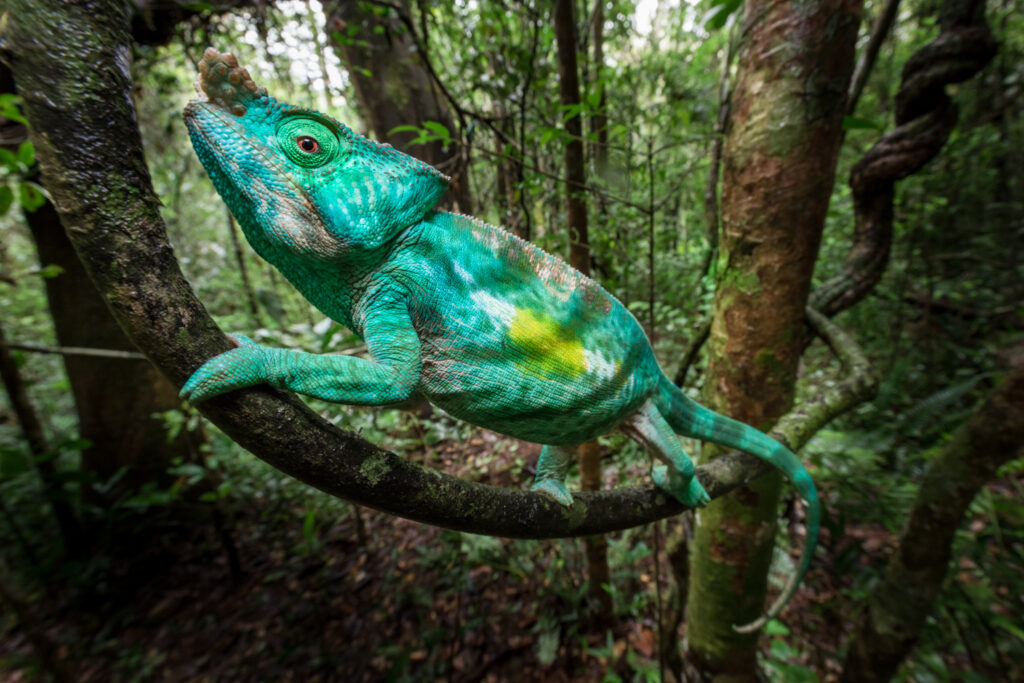
A male Parson's chameleon, one of the world's largest species, climbing in forest understorey in Andasibe-Mantadia National Park © Nick Garbutt
Nick and Madagascar
Who is looking at who? Nick with a female fosa
Nick is well-known as a leading authority on the wildlife of Madagascar. He first visited the island in 1991: with £200 in his pocket and 60 rolls of film, he spent a month back-packing and exploring four of the parks and reserves. Over the past 30 years, he has returned most years and in doing so has travelled the length and breadth of the island many times, visited all the major national parks and reserves and has seen 80% of the island's lemurs (now more than 100 species) and a very high proportion of the other native mammals and endemic fauna in the wild.
He has written several books on the island's wildlife, including the new and massively expanded Handbook of Mammals of Madagascar (Bloomsbury / Princeton UP 2023), plus Madagascar Wildlife: A Visitor's Guide (5th edition, 2023) and Chameleons. His enthusiasm for the country and its natural history remains undiminished and infectious.

A mossy leaf-tailed gecko just becoming active in forest understorey at dusk, Maromizaha Forest, near Andasibe © Nick Garbutt
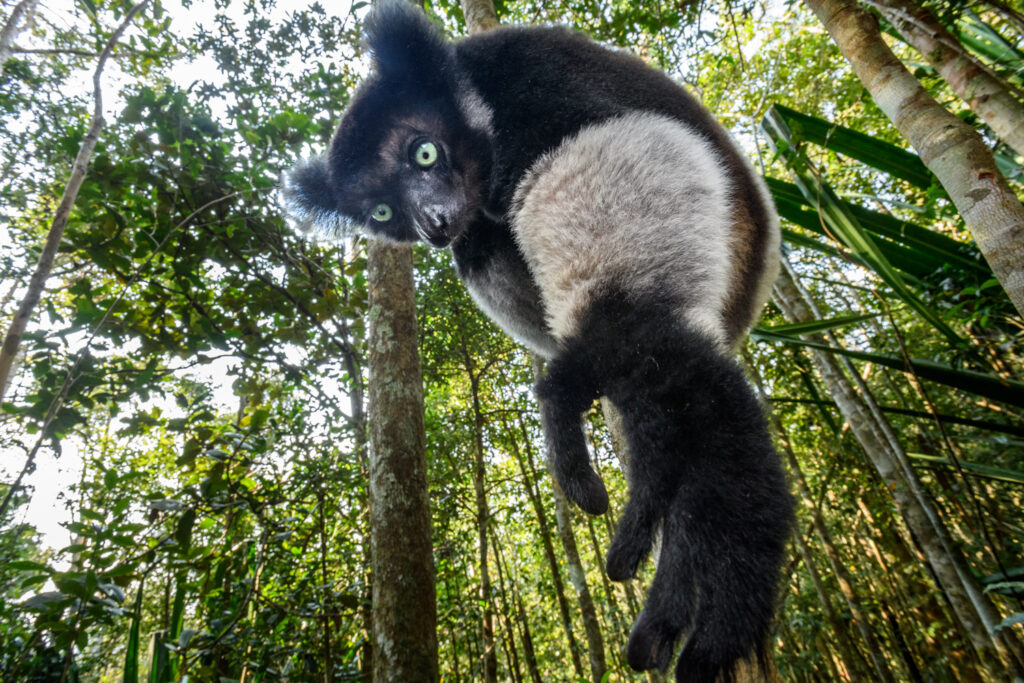
Male indri reaching for leaves in forest understorey. Mitsinjo Reserve, Andasibe-Mantadia National Park © Nick Garbutt

Wallace's flying frog in understory vegetation, Danum Valley © Nick Garbutt
Dates: TBC
Price: £TBC (Twin-share: Flights inclusive)
Price: £TBC (Twin-share: Land Only)
Single Supplement: £TBC
Maximum Group 12
Current Availability: please enquire
LEADERS: Nick Garbutt & Alex Hyde
GRADING: Moderate. A variety of conditions from hot, humid lowland rainforest (Danum Valley), to cooler montane forests (Mt Kinabalu). Walks are generally short to medium length (1-3km), but hills can be moderate to steep with uneven under foot conditions in both lowland and montane forest areas. Both early morning and late evenings as there are night walk options.
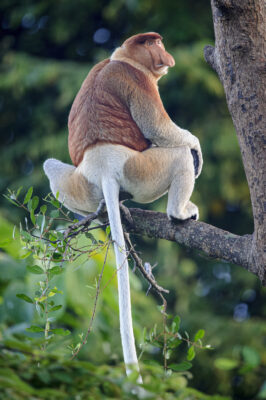
Groups of proboscis monkeys are one of the highlights along the Kinabatangan River © Nick Garbutt
The giant Rafflesia can sometimes be seen on the lower slopes of Mount Kinabalu © Nick Garbutt
Few places conjure more evocative images of mystery than Borneo. Its varied rain forests are amongst the most diverse on the planet and are home to some of the most charismatic and well-known ‘jungle’ species. Perhaps most renowned are two extraordinary primates; the fabled orang-utan, literally "Man of the Forest", and the improbable proboscis monkey. There are also a host of other primates too, like cheeky long-tailed macaques and elegant leaf monkeys. Add to these, pygmy elephants (the world’s smallest), spectacular rhinoceros hornbills, several species of pitta - exquisite jewel-like birds, a myriad of tree frogs and some of this natural wealth becomes apparent.
Focusing on three of the most diverse locations, Mount Kinabalu, the Kinabatangan River and Danum Valley, we will explore in considerable depth these enchanting cloud forests and rain forests and have an excellent chance to see and photograph many of the island's iconic species.
Rising like a citadel, Mt Kinabalu, the highest peak on the island, is a montane 'oasis' that supports a wealth of high elevation specialists. In these forests grow a profusion of pitcher plants and Rafflesia, the world's largest flower. The upland cloud forests are a macro photographers paradise, with a myriad of unusual invertebrates, frogs and reptiles.
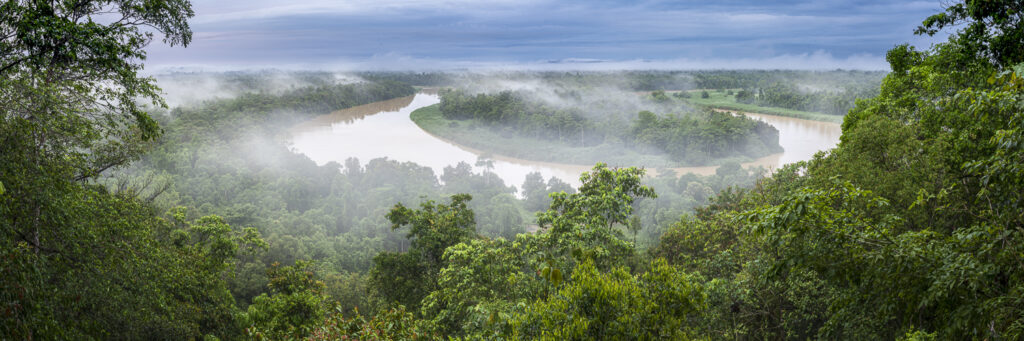
The Kinabatangan River is one of the finest wildlife areas on Borneo © Nick Garbutt
The Kinabatangan River is one of the most important wildlife sites in SE Asia. It is a mosaic of natural riverine forest, mangrove and nipah palm habitat, that supports an extraordinary diversity of wildlife. It is perhaps the best place to see and photograph proboscis monkeys and is also very good for orange-utans, other primates and pygmy elephants. Birds, frogs and reptiles also abound. We will stay at two different lodges that each offer different and varied photographic potential.
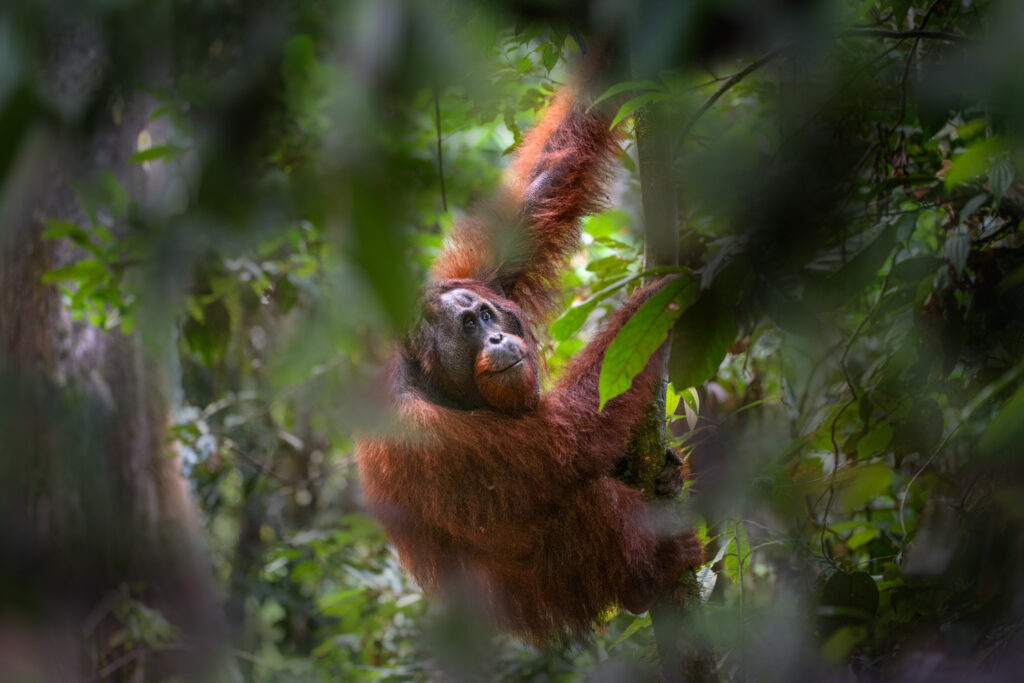
A magnificent dominant flanged male Orang-utan. These spectacular primates are often seen along the Kinabatangan River and in Danum Valley © Nick Garbutt
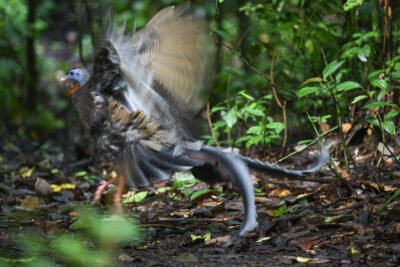
With luck, the spectacular Great Argus Pheasant can be seen in Danum Valley © Nick Garbutt
Many regard Danum Valley as Borneo’s premier wildlife location. The combination of untouched primary rainforest brimming with wildlife and a wonderful lodge in an exceptional setting is remarkable. So many of the major sought-after species, like orang-utans and red leaf monkeys are seen in the forests immediately around the lodge. The extensive and well maintained trail network allows access to all forest areas, where so many varied exciting animal encounters and photographic opportunities occur.
There is also scope for numerous exciting night walks in all locations, with Danum Valley being particularly good for this. At night a completely different cast of characters become visible; there are numerous frogs, lizards and reptiles, bizarre invertebrates and if fortune favours, endearing primates like the western tarsier and slow loris and other mammals such as, mouse deer, colugo and different species of giant flying squirrel.
In combination the locations we visit offer a window in to the natural splendour of Borneo and provide a wide range of opportunities to experience and photograph the island's incomparable wildlife.
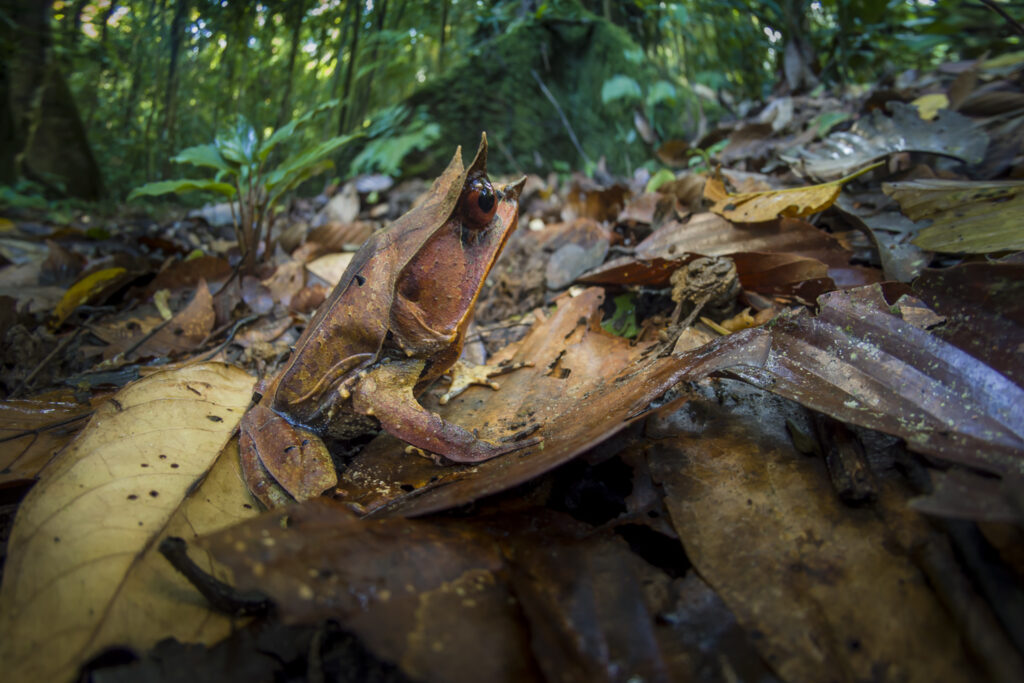
The magnificently camouflaged Bornean horned frog is a potential highlight in Danum Valley @ Nick Garbutt
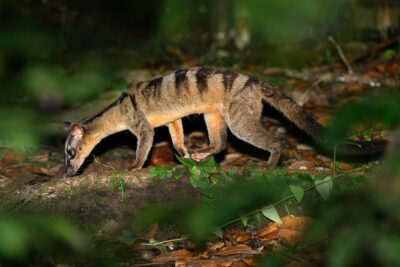
A banded civet at night © Nick Garbutt
Why a Workshop?
Tropical rain forests are the greatest expressions of life on the planet and offer a wonderful array of species, but they are also amongst the most challenging places to take photos successfully.
For this workshop tour, hosted by two leaders with a wealth of rain forest photography experience, we have chosen extended stays in Borneo's two premier wildlife locations to maximise the photographic potential and teaching opportunities, so that participants gain as much insight as possible.
Rain forests in Borneo can be particularly hot and humid, so we have chosen lodges that best cater for comfort in our chosen locations, but that also offer excellent immediate access to the forest and create a convivial atmosphere.
Photography Equipment
A variety of equipment is useful, from close focus wideangle e.g. 16-35mm, to macro e.g. 105mm, to telephoto, e.g. telephoto zoom 100-400mm to cover most situations with invertebrates, frogs, reptiles and primates. Flash equipment very useful. A longer telephoto e.g. 500mm or 600mm is good for birds and sometimes primates. Waterproof protection for camera gear is recommended. A tripod is advisable.
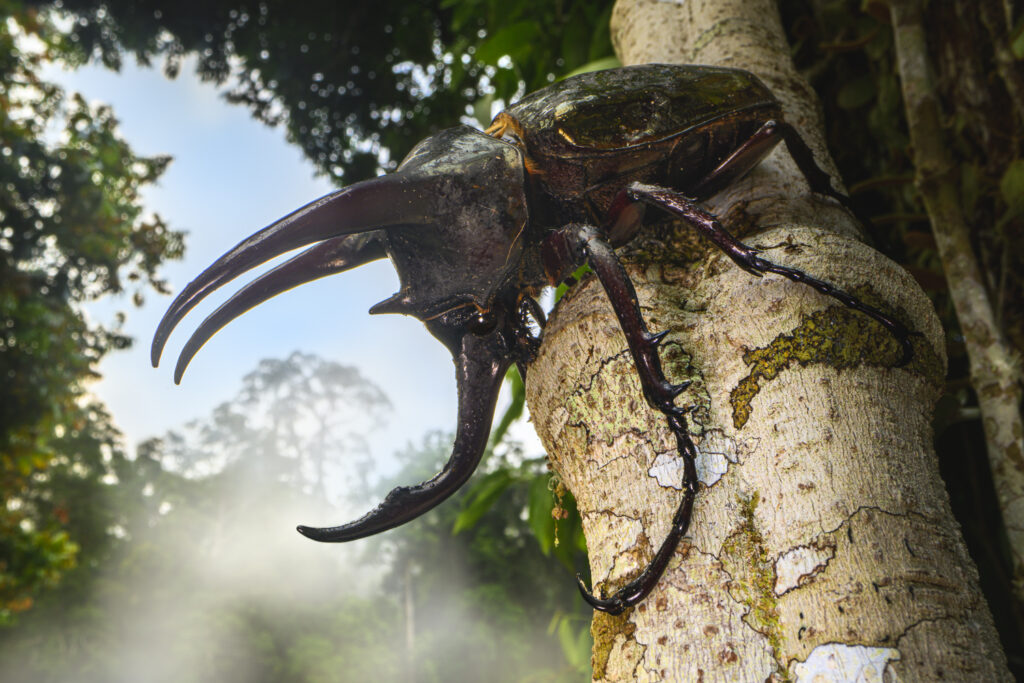
Macro subjects like this atlas three-horned rhinoceros beetle are an important component of any rainforest workshop © Nick Garbutt
Alex is arguably the UK's best macro photographer. In many rainforest locations we take advantage of lodge moth traps that draw in a wealth of subjects © Nick Garbutt
Alex Hyde
I am delighted to be joined by good friend Alex Hyde on this trip. Alex is one of the UK's finest exponents of macro photography, combining the best of art and science into his exquisite images. He is a master of the technical aspects of digital photography and in the field or indoor workshop environment has the enviable skill of being able to convey challenging topics and ideas, concisely, simply and in a way that makes them understandable. To see more of Alex's stunning work click here
Click: contact Wildlife Worldwide to book this tour
Testimonials
"We've been traveling with Nick for sixteen years, and have been lucky enough to have had some of the most wonderful animal encounters in awe inspiring locations, from Orang-utans and Proboscis Monkeys in Borneo, Jaguars in the Pantanal and the Wildebeest migration in Tanzania to the tiny things like pygmy chameleons and Giraffe-necked Weevils in Madagascar. No matter how big or small the subject, Nick will encourage and give advice on how to photograph it with unending patience and good humour.
Not a moment of any day is wasted often starting before dawn to perhaps admire the sunrise on Mount Kinabalu in Borneo and ending well after dusk maybe staking out an Aye-aye nest in Madagascar. And then there's the photo editing tuition if wanted in between. Every day is a new adventure and we can't wait for the next trip."
Jan and Nick, Madagascar 1998 & 2014, Tanzania 2000 & 2006, Borneo 2008, Pantanal 2011 etc.
"We did want to sing Nick's praises in respect of our Serengeti trip. It is perfectly possible to go on a NG Wildlife Photography trip when you don't know anything at all about photography!! He is patience personified and he set about explaining what we needed to do to draw maximum benefit from the trip. I don't know whether or not it is his custom to organise tutorials during any free time, but this he offers very willingly and we simply could not have had a better teacher.
On the wildlife side of things, he is just awesome, so knowledgeable that you have faith in him right from the outset, and he never appears to tire of questions even after 14 days!
Our whole trip was also significantly complemented by Jombi and Faizal who could not have tried harder to present for us the best viewing spot, who were extremely knowledgeable in their own right and who were frankly an absolute joy to be with."
Jan and Paul, Tanzania 2014
"A fantastic trip, and we would repeat it in a heartbeat if only we could! This was our first trip with Nick, but won't be the last. Nick is great trip leader, and a thoroughly nice person to boot. He works tirelessly to get the most out of the trip for everyone and, where possible, to tailor content to the wishes of individuals.
Early mornings and late nights are mainstays of this experience, but the great thing is you can do as much or as little as you choose - be warned though; the wildlife is compulsive! We'd hoped for wild orang-utan and tarsier; we were incredibly fortunate to see both. And what magical encounters too, so much more than just 'a tick'. Add in frequent night walks that reveal an entirely new perspective, and you've a top drawer trip. Nick knows the areas extremely well, and uses excellent local guides. Food and accommodation is fine throughout, culminating in the wonderful Borneo Rainforest Lodge in Danum Valley - a wildlife traveller's heaven!"
Anne and Steve, Borneo 2014
"What a wonderful exciting and memorable trip to the Pantanal, with brilliant views of jaguars during the day and night, giant otters, caiman, capybara. birds & frogs - the list is endless !! Part of the trip included a visit to Iguassu Falls a definite must do.
Nick is an outstanding guide with incredible enthusiasm, patience and knowledge. He makes every effort to ensure that everyone has a close encounter of the wildlife kind which is unique and personal. Careful consideration is given to the welfare of the animals and minimising disturbance to the environment. Locations are carefully selected to give the best opportunities for intimate and rewarding wildlife experiences. The lodges were eco-friendly with lovely staff and enthusiastic guides. Photographic sessions were tailored to everyone's ability and were fun and informative.
A top quality trip!"
Barbara, Pantanal Tour 2012
"This was not an easy trip, and the word 'holiday' may not apply - BUT the reward was fully worth the effort! On our adventure we stayed in all manner of accommodation, from western-style with modern comforts, to remote and basic bush camps in the forest. Food was mixed too, but included the best chocolate mousse ever.
But there is no such variation when it comes to the quality of wildlife viewing! We saw things, special things - and very special things. From the astonishing diversity of geckos and chameleons, through numerous kinds of lemurs, to the most remarkable aye-aye encounter, that will remain with us for life.
Nick is a brilliant trip leader, as is his local guide Hery - they are a winning combination. Expect long days, long drives and aching muscles, coupled with stunning scenery, exceptional encounters and magical memories. Be prepared for an assault on your senses. The culture and people add an extra dimension to this trip too, especially in the more remote areas visited. There are many reasons why Nick is a terrific leader - his expertise and patience (notably before and during the trip), his enthusiasm and tireless commitment, and his sense of humour. Not insignificant, either, is his taste in restaurants and patisseries!"
Anne and Steve, Madagascar 2014
"Wonderful trip which lived up to expectations. Nick catered for our different photographic levels and interests and each of us came back having learnt new things an keen to learn more. The wildlife was abundant and there was a good variety of photographic opportunities. The guides Jombi and Faizal were terrific and their knowledge and enthusiasm really made the trip memorable. The combination of Nick and the guides and of course the wildlife made it a great trip"
Kathy & Brian, Serengeti Migration Tour 2014
"As a professional wildlife biologist, a very novice photographer and someone with little experience of organised tours, I was somewhat apprehensive about joining Nick's trip to Madagascar. I certainly needn't have worried. Nick's comprehensive knowledge of the island, its wildlife and his local contacts meant we were often well off the main tourist routes and had wonderful opportunities to see some of the rarer lemur species.
Our small group size allowed us to have some very intimate wildlife encounters. Whilst always conscious of animal welfare, we never felt rushed and were able to observe fascinating natural behaviours. I'll never forget the aye-aye tapping a tree trunk to find food.
Nick went the extra mile getting us up and dawn and out again after dark to maximise chances of finding wildlife and optimise conditions for photography. He took time to ensure everyone had a chance to take photos and was always happy to help where necessary - which was often in my case.
I have some fabulous memories, pretty good photos and I'm already planning my next trip!"
Jane, Madagascar, 2014
"Our tour with Nick was fantastic and we had so many incredible tiger sightings: even I got some great photos. Tigers, leopards, rhinos, wild dogs, bears, jackals and wild elephants are just a few of the animals we saw. We loved the whole trip."
Penny & Richard, India 2014
"We had a very good Tanzania trip with Nick Garbutt who was an excellent group leader, very helpful for those needing photographic assistance - he was always patient, kind and prepared to go the extra mile for us. We also had two first class guides, Jombi and Faizal whose experience, driving skills and knowledge of the wildlife provided us with the best chances of good photographs. I will say that following my first Wildlife Worldwide holiday I will not hesitate to travel with the company again. Well done."
Gloria, Tanzania 2014
"The whole trip was absolutely wonderful. The two Nicks (Mackman and Garbutt) were great, so patient and always there when we needed help. What an experience and a privilege to be supported by them, both at the top of their profession. I have not stopped talking about the trip since returning home."
Louise
"Thank you so much for the tour and all the photography and lightroom tips. You have a wonderful personality, enthusiasm and professionalism for leading the tours and obviously a lot of patience for all levels of experience"
Chris
"You are an exceptional teacher. It was a joy listening to you."
Jean
All Zambia Photo & Art Safari 2015
"My trip was organised by Wildlife Worldwide, and led by the brilliant Nick Garbutt, whose knowledge of the natural history of Borneo is second to none, and whose wildlife and photography skills led to some great images (although don’t mention Atlas Moth!). All in all a brilliant trip, and I can’t wait to return!"
Adrian, Borneo 2015
“The trip was outstanding and we felt privileged to be in such an unspoilt an area and it was such a thrill to see snow leopards. The guides were amazing in their ability to find the cats and to help us to follow them. As always ,Nick was the perfect tour leader, helping everyone with their photography and always considerate. How glad we are that even at our age, we were able to get there. Thank you to everyone who organised the trip.”
Felicity & Roger, Ladakh Snow Leopard Tour 2017
“Nick was fantastic thoughout. The guides at Singinawa were outstanding and the accommodation excellent. We really enjoyed our time at Godwad and had great experiences both with the leopards and also cultural.”
Jenny and Graham, India Wild Cats 2017
“I had an absolutely incredible trip to India. The wildlife, people, cultural experience and food were just perfect. A special mention to the guides at Kanha who were world-class and the managers at Godwad for going out of their way to making us feel welcome. Nick was a fabulous host. I always felt like I was in safe hands and this was very much appreciated. I will definitely be back!”
Jashika, India Wild Cats 2017
"Alex and Nick are always a pleasure to travel with and go above and beyond what is required to ensure the best possible experience."
Tim, Austria Photo Workshop 2018
"The tour leaders, Alex Hyde and Nick Garbutt were outstanding both in their knowledge and expertise in the subject of wildlife photography and in their ability to communicate their knowledge. Their easy going demeanour also added much to the holiday experience. The accommodation was also excellent, friendly and comfortable"
Richard, Austria Photo Workshop 2018